If you crash a motorbike in Phu Quoc, stop immediately and never leave the scene. Call 115 for an ambulance if anyone is hurt and 113 for police in any accident involving injuries, substantial damage or a dispute. Photograph everything before vehicles are moved, admit nothing, sign nothing, and expect minor mechanical fixes to cost 50,000–200,000 VND (about US$2–8), while serious incidents hinge almost entirely on your insurance and licence status.
The First 10 Minutes: What To Do at the Crash Scene
Whatever the severity, the legal baseline is identical: stop immediately and never leave the scene. Riding away from an accident you think is trivial turns a routine insurance matter into a potential criminal one, and it forfeits nearly all your leverage with both police and insurers. Pull fully onto the shoulder if you can, switch off the ignition, and steady the bike so it does not block traffic or leak fuel.
Deal with people before paperwork. If anyone is injured, call 115 for an ambulance immediately — that is the national medical emergency number and it works from any Vietnamese SIM or roaming phone. For significant accidents involving injuries, substantial damage or disputes, call 113 for police at the same time. If the injuries are minor and someone can still ride or flag down a car, heading straight to a hospital can be faster than waiting for an ambulance to cross the island.
- Get everyone off the carriageway; secondary collisions are the biggest danger after the crash itself.
- Call 115 for any injury; call 113 for injuries, substantial damage or any disagreement about fault.
- Photograph everything before bikes are moved: both vehicles from several angles, road conditions, all damage, any injuries, plus the time, location and weather.
- Exchange details with the other rider or driver and note licence plate numbers; ask witnesses for their phone numbers.
- Do not admit fault, do not hand over cash on the roadside, and do not sign anything you do not fully understand — Vietnamese-language documents can commit you to more than you realise.
- Call your rental shop so they hear it from you first, not from the police.
The photo habit matters more than anything else on this list. Police, insurers and the rental shop will all work from the same file, and a set of timestamped photos of the vehicles, the road surface, the damage and the surrounding conditions is usually the difference between a clean claim and a month of argument.
Calling the Police (113): When You Must — and When You Can Skip It
For significant accidents — anyone injured, substantial damage, or any dispute about who was at fault — call 113. Traffic police will attend, take statements from both sides and any witnesses, inspect the bikes, and produce an accident report (biên bản). That report is the single document your travel insurer will ask for, so if there is any chance of a claim, you want it to exist.
In practice, not every scrape needs police. If you low-side your rental at walking pace on a sandy corner, nobody else is involved and the only casualty is the scooter's mirror, the matter is normally settled directly with the rental shop out of your deposit. A simple mechanical failure — a flat tire, a snapped cable, a slipped chain, the kind of fix that typically costs 50,000–200,000 VND (US$2–8) at a roadside mechanic — involves no police at all.
That private route suits one narrow situation: no injuries, no third party, damage only to your own rented bike, and a shop you trust. It is a poor fit if another person, vehicle or property is involved, if anyone is hurt, or if the other party starts demanding cash on the spot. Settling privately without a report leaves you with no paper trail, and insurers routinely reject claims that lack one. When in doubt, the report is cheaper than the doubt.
The language barrier is manageable if you know who to call. The Phu Quoc road-safety guide recommends +84 94 852 31 39 for translation help and accident guidance, and the island's tourism hotline 0297 384 6066 also assists foreign visitors. At the roadside, keep your statements short and factual — direction of travel, rough speed, what you saw — and ask for an interpreter before any document is put in front of you. Police on Phu Quoc deal with foreign riders regularly, but you should still refuse to sign anything you do not fully understand.
Medical Help: Vinmec Phu Quoc and Your Hospital Options
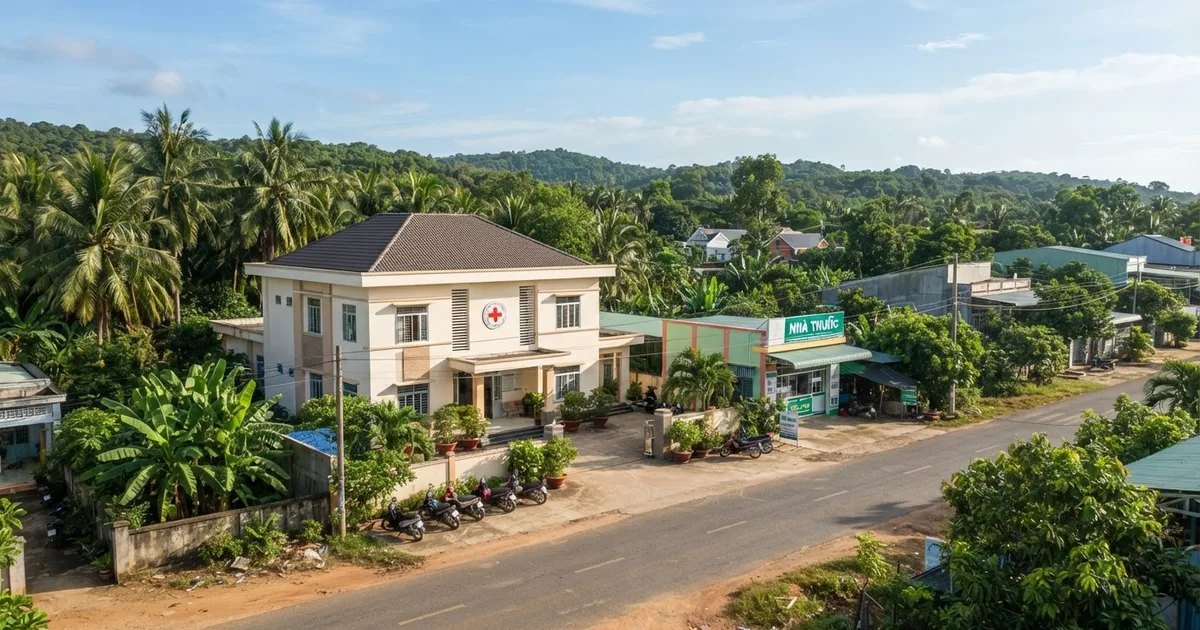
Call 115 for any injury — that is the national medical emergency number and it works from every Vietnamese and roaming phone. But on an island where accidents happen along the coast road, an ambulance may have a long way to come. The Phu Quoc road-safety guide makes a practical point: if you have transport, going directly to Vinemc Phu Quoc may be faster than waiting for an ambulance.
Vinemc Phu Quoc (phone +84 297 398 6688) is the island's international-standard private hospital, with English-speaking staff, modern imaging and card payment. For anything beyond scrapes — a head impact, wrist or collarbone pain, a deep laceration — it is the default choice for foreign visitors. The public alternative, Xuyen Vu General Hospital in Duong Dong, also handles serious trauma and costs less, but expect Vietnamese-language service and a busier environment.
Two practical notes. First, do not self-discharge a possible head injury: symptoms often appear hours later, and insurers look far more favourably on claims where a doctor documented the injury on day one. Second, keep every receipt, discharge summary and prescription — photographs of the paperwork are enough to open a claim while the originals travel home in your bag.
Beating the Language Barrier After a Crash
Three phone numbers solve most translation problems on the island. The dedicated accident-support line +84 94 852 31 39 exists precisely for foreigners dealing with a crash — use it before you speak to police or sign anything. The Phu Quoc tourism hotline 0297 384 6066 handles general tourist support, and the national tourist support line 1800 5555 is another working option from the island.
Beyond the hotlines, three local resources help: your hotel's front desk (most resort staff speak workable English and will phone the police for you), your rental shop (a good shop would rather talk to police than lose a customer), and the camera function of Google Translate for reading Vietnamese documents. None of these replace an official interpreter at the police station, but they will carry you through the first hour.
Tip: Save these five numbers in your phone before you ride: 113 (police), 115 (ambulance), +84 297 398 6688 (Vinmec Phu Quoc), +84 94 852 31 39 (translation and accident help) and 0297 384 6066 (tourism hotline). Thirty seconds of setup now beats searching for numbers on a roadside.
Insurance: What Works, and What Gets Claims Rejected
Contact your travel insurance provider as soon as practical after the accident — ideally the same day. Insurers open a claim file immediately, tell you exactly which documents they need, and some can arrange direct billing with Vinmec Phu Quoc so you pay nothing out of pocket. Waiting until you fly home makes every step slower and gives the insurer an easy reason to question the claim.
The claim file almost always needs four things: the police accident report (which is why you call 113 in any significant crash), itemised hospital receipts and a medical report, photos of the scene and the damage, and proof that you were legally entitled to ride. That last item is where most motorbike claims in Vietnam die.
The standard exclusions to check before you even rent a bike: riding without a valid licence (for foreign visitors this normally means an International Driving Permit with the A motorcycle category carried alongside your national licence), riding without a helmet, riding under the influence of alcohol, and any use outside the policy's declared scope. Most travel policies also carry an excess — the first slice of every claim you pay yourself, commonly US$50–100. Rental shops sometimes offer their own damage cover for the bike itself, but that almost never covers your medical costs, so it is not a substitute for travel insurance.
Who this setup suits and who it does not: a standard travel policy plus an IDP is right for any confident rider planning to explore the island. It is a poor fit for complete beginners — Phu Quoc's mix of sand on bends, trucks and afternoon downpours is an unforgiving classroom — and for anyone whose policy excludes two wheels entirely. Novices are far better off booking a car with driver or joining an organised tour than renting a 125cc scooter and hoping.
What an Accident Actually Costs: Repairs, Fines and Hospital Bills
The good news is that small problems on Phu Quoc are genuinely small. A roadside mechanic repair for a scooter breakdown typically costs 50,000–200,000 VND (about US$2–8) depending on the issue — a flat tire, a snapped cable, a chain adjustment. Cosmetic damage to a rental (mirror, lever, scratched panel) is usually deducted from your deposit at the shop's published rates, so photograph the bike's existing scratches at pickup and agree on the damage price list before you ride off.
The middle tier is medical. A Vinmec visit for cleaning and dressing road rash, an X-ray and medication can run from a few dozen to a few hundred US dollars depending on treatment, and overnight observation costs more — all claimable if you keep receipts. Fines add up too: riding without a helmet is typically fined around 100,000–200,000 VND, and riding without a valid licence can cost 1–2 million VND under current traffic decrees, payable before you get your documents back.
The top tier is any accident involving a third party. Compensation for injuries or damage to another vehicle is negotiated with police present, and this is exactly where the rules "do not admit fault" and "do not sign anything you do not fully understand" matter most. The police report and your insurer do the heavy lifting; cash handed over on the roadside does neither.
| Scenario | Who to call | Typical cost |
|---|---|---|
| Flat tire, snapped cable, minor breakdown | Local mechanic or rental shop | 50,000–200,000 VND (US$2–8) |
| Damage to your rental only, no injuries | Rental shop first; police optional | Deposit deduction per damage list |
| Road rash, sprain, minor laceration | 115, or go direct to Vinmec (+84 297 398 6688) | Roughly US$50–300, claimable |
| No-helmet or no-licence police stop | — | ≈100,000–200,000 VND / 1–2 million VND fine |
| Injury, third-party damage or dispute | 113 police + 115 ambulance | Police report; insurer handles costs |
Dealing With the Rental Shop After a Crash
Call the shop before the police finish, if you can. A reputable Phu Quoc rental business — the kind that keeps a copy of your passport rather than the passport itself and hands over helmets in good condition — will want to hear about the accident from you, send someone if the bike cannot be ridden, and quote damage from a written price list instead of improvising one. Shops like Sabrina Rental deal with scrapes, flat tires and breakdowns every week in high season: one call usually gets you a replacement bike and a lift back to your hotel.
What a good shop does: quotes damage from a written list, keeps the deposit question separate from the police report, and never asks you to sign a Vietnamese-language liability statement on the roadside. What a bad shop does: invents damage, withholds your passport over disputed amounts, or pressures you to settle in cash on the spot. If a shop behaves badly, escalate through the tourism hotline 0297 384 6066 or the tourist support line 1800 5555 — and remember that your insurer will want the police report regardless of what the shop says.
One honest caveat about riding on the island generally: renting a scooter is a poor fit if you have never ridden one before, if you plan to drink at dinner and ride home, or if you cannot produce an IDP with the motorcycle category when police ask. Phu Quoc's roads are calmer than Hanoi's, but loose sand on bends, unlit trucks at night and sudden downpours catch out experienced riders too.
Frequently Asked Questions
What number do I call for an ambulance in Phu Quoc?
Call 115 — the national medical emergency number, reachable from any Vietnamese or roaming phone. If you have your own transport or a friend can drive, going directly to Vinmec Phu Quoc (+84 297 398 6688) may be faster than waiting for an ambulance, especially in the far south or north of the island.
When must I call the police (113) after a motorbike accident?
Call 113 for any significant accident: someone is injured, damage is substantial, or the parties dispute fault. Police produce the accident report your insurer will require. For a solo spill with only cosmetic damage to your rental, you can normally settle directly with the rental shop from your deposit instead.
How much does a minor scooter repair cost in Phu Quoc?
A roadside mechanic typically charges 50,000–200,000 VND (about US$2–8) for common fixes such as flat tires, snapped cables or chain adjustments. Cosmetic damage to a rental is deducted from your deposit at the shop's published rates, so photograph the bike's existing scratches at pickup.
Can I go straight to the hospital instead of waiting for an ambulance?
Yes. Local road-safety guidance says that if you have transport, heading directly to Vinmec Phu Quoc may be faster than waiting for an ambulance. Vinmec is the island's international-standard hospital with English-speaking staff; call ahead on +84 297 398 6688 so the emergency team expects you.
Who can help me translate after an accident?
Call +84 94 852 31 39, the dedicated line for translation help and accident guidance in Phu Quoc. The island tourism hotline (0297 384 6066) and the national tourist support line (1800 5555) can also assist. Use translation support before signing any Vietnamese-language document at the police station.
Will travel insurance cover my motorbike accident?
Usually yes — provided you hold an International Driving Permit with the motorcycle (A) category, wore a helmet, and were not drinking. Claims need the police report from 113, itemised hospital receipts and scene photos. Notify your insurer as soon as practical; most policies carry an excess of roughly US$50–100.
Should I pay cash at the roadside to settle an accident?
No. Cash paid on the roadside leaves no paper trail, rarely ends the dispute, and can be treated as an admission of fault. Stop, photograph the scene, call 113 whenever injuries or disputes are involved, and let the police report and your insurer determine who pays what.
What exactly should I photograph at the accident scene?
Photograph both vehicles from several angles, the road surface and conditions, all damage, any injuries, and the wider scene showing time, location and weather. Take the photos before vehicles are moved — this file feeds the police report, your insurance claim and any deposit discussion with the rental shop.
Riding Phu Quoc and want a local team on your side? Sabrina Rental rents well-maintained motorbikes with helmets, maps and honest route advice — and if something goes wrong, we speak your language and know exactly who to call. Contact us for rentals, itineraries or help after an incident.
Contact Sabrina Rental