Shopping in Phu Quoc: Markets, Souvenirs & What to Buy (2026)
Phu Quoc is famous for three products — pepper, fish sauce, and pearls — and buying them directly on the island where they're produced gets you better quality at lower prices than anywhere else in Vietnam. But the island's markets also sell plenty of tourist junk, fake goods, and overpriced souvenirs that aren't worth your money.
Living here, I know which products are genuinely from Phu Quoc and which are mainland imports repackaged for tourists. This guide covers the markets worth visiting, the souvenirs worth buying, how to spot fakes, and where to get the best deals.
Worth considering: Pearl jewelry (from certified farms only), handmade crafts, coconut oil.
Avoid: Night market "pearls," branded clothing (counterfeit), coral products, unknown-brand fish sauce.
Best market: Dinh Cau Night Market for food experience, Duong Dong Day Market for authentic local shopping.
Dinh Cau Night Market
The night market is Phu Quoc's most visited shopping destination, running every evening from about 5 PM to 10:30 PM along the Duong Dong waterfront.
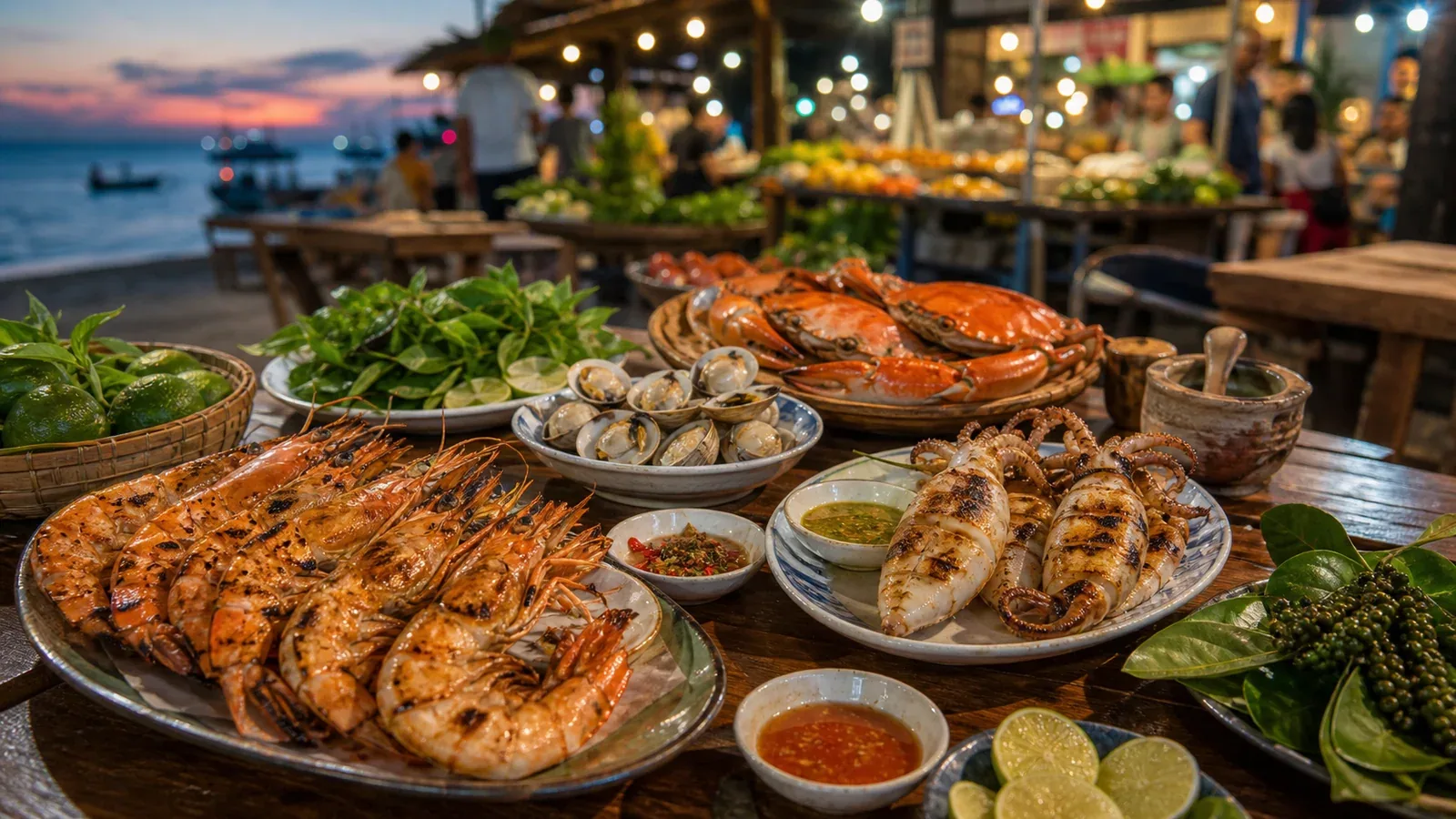
For food: The night market is excellent. Grilled seafood, Vietnamese street food, fresh juices, and local specialties are available from dozens of stalls. This is primarily a food market that also sells souvenirs, not the other way around.
For shopping: The non-food stalls sell a mix of genuinely local products and generic tourist merchandise. The pepper, dried seafood, and sim wine stalls toward the back of the market are the best shopping finds. The clothing, jewelry, and accessory stalls at the front are mostly overpriced or counterfeit.
Price reality: Night market souvenir prices are 30-50% higher than what you'd pay at day markets or directly from producers. You're paying a convenience and atmosphere premium. For quality and value, buy food at the night market and buy souvenirs elsewhere.
For a full market guide, see our Phu Quoc Night Market Guide.
Day Markets
The day markets are where locals actually shop, and they offer better prices and more authentic products than the night market.
Duong Dong Market
The main wet market in Duong Dong town, operating from early morning (5-6 AM) until early afternoon (1-2 PM). This is a working market selling fresh seafood, meat, vegetables, fruit, and household goods. It's not set up for tourists — no English signs, no souvenir stalls — but it's the most authentic market experience on the island.
What to buy here: Fresh tropical fruit (mangosteen, rambutan, dragon fruit) at local prices. Dried seafood at 50-70% of night market prices. Local snacks and Vietnamese cooking ingredients.
Photography note: The market is incredibly photogenic in the early morning when fishermen deliver their catches and vendors set up colorful displays of produce. Be respectful when photographing — buy something from a stall before pointing a camera at the vendor.
An Thoi Market
A smaller local market in the south of the island. Less tourist-oriented than Duong Dong but with similar products. If you're staying in the south island area, this is more convenient than driving to Duong Dong for local goods.
What to Buy — The Good Stuff
These are the genuinely worthwhile purchases on Phu Quoc, either unique to the island or significantly better quality/price than elsewhere.
Phu Quoc Pepper
The island's most famous export and arguably the best black pepper in the world. Phu Quoc pepper has a geographic indication (GI) certification, similar to Champagne or Parma ham.
Types available:
- Black pepper — The standard, most common. Rich, aromatic, and more complex than mainland pepper.
- White pepper — Milder, used in lighter dishes. Less common and pricier.
- Red pepper — Rare, harvested when fully ripe. The most expensive variety with a fruity, complex flavor.
Where to buy: Directly from pepper farms (several offer tours and tastings) for the best price and guaranteed authenticity. The Khu Tuong and Suoi Da areas have established farms open to visitors.
Price guide: Black pepper runs 150,000-250,000 VND per kg at farms, 300,000-500,000 VND at the night market, and even more at airport shops.
Fish Sauce (Nuoc Mam)
Phu Quoc fish sauce has its own GI protection and is considered the finest in Vietnam. Traditional production uses anchovies fermented in wooden barrels for 12-15 months.
How to choose quality: Look for the protein degree number on the bottle — higher is better. 40+ degrees is premium quality. Check for the Phu Quoc GI label. Bottles from known factories (which you can visit) are trustworthy.
Where to buy: Visit a fish sauce factory directly. Several in Duong Dong offer free tours where you see the barrel rooms and can taste before buying. Factory prices are 30-50% lower than tourist shops.
Packing tip: Fish sauce in checked luggage only. Double-bag it in ziplock bags. If it leaks in your suitcase, you'll smell it forever.
Sim Wine
A locally produced wine made from sim berries (rose myrtle), a wild fruit that grows across Phu Quoc island. It has a sweet, mild flavor with a deep purple color. Unique to the island and makes an unusual gift.
Price: 80,000-200,000 VND per bottle depending on brand and quality.
Dried Seafood
Sun-dried squid, shrimp, and fish are local specialties. The quality from Phu Quoc producers is high because the seafood is caught fresh and dried locally.
Best buys: Dried squid (muc kho), dried shrimp, and anchovy products. Buy from the day market or directly from producers for the best prices.
Local Honey
Phu Quoc produces honey from bees that pollinate the island's tropical flowers. Some honey is infused with local spices. Available at farms and specialty shops.
Pearls: Real vs Fake
Phu Quoc has genuine pearl farms producing real cultured pearls. It also has hundreds of market stalls selling fake pearls to unsuspecting tourists.
How to identify real pearls:
- Temperature test: Real pearls feel cool when first touched and warm quickly. Plastic stays room temperature.
- Texture test: Real pearls feel slightly gritty when rubbed gently against your teeth. Fake pearls feel smooth.
- Weight: Real pearls are heavier than plastic imitations of the same size.
- Price: If a "pearl" necklace costs 100,000 VND, it's not real. Genuine cultured pearl jewelry starts at 500,000 VND for simple pieces and can reach millions for high-quality items.
Where to buy real pearls: Visit an established pearl farm with a showroom. Several farms near Long Beach offer tours of their operations followed by a shop. The experience of seeing how pearls are cultivated adds confidence in the product's authenticity.
Phu Quoc Pepper — Buying Guide
Since pepper is the top souvenir, here's how to ensure you're getting the real thing.
The problem: Much of the "Phu Quoc pepper" sold in tourist areas is actually mainland Vietnamese pepper repackaged in Phu Quoc-branded bags. It's cheaper but lacks the distinct flavor profile of genuine island pepper.
How to verify authenticity:
- Buy directly from farms where you can see the pepper growing
- Look for the Phu Quoc pepper geographic indication (GI) label
- Fresh pepper should be aromatic — open a bag and smell it. Real Phu Quoc pepper has a noticeably richer, more complex aroma than generic pepper
- Price is a guide — if it's suspiciously cheap (under 100,000 VND/kg for black pepper), it's probably mainland product
Best value: Farm-gate prices are the lowest. Some farms offer discounts for buying multiple kilos. Vacuum-sealed bags maintain freshness for months.
Fish Sauce — How to Choose
Visit a factory. This is both a cultural experience and the best way to buy fish sauce. Several factories in Duong Dong welcome visitors for free tours. You'll see the massive wooden fermentation barrels (some holding 10+ tons of anchovies), learn about the production process, and taste different grades before buying.
Grade system: Fish sauce is graded by protein content measured in degrees (do dam). The higher the number, the more concentrated and flavorful:
- 30-35 degrees: Standard cooking grade, good for everyday use
- 40-43 degrees: Premium grade, best for dipping sauces and finishing dishes
- 60+ degrees: Extra premium, very concentrated, used sparingly
Factory vs tourist shop prices: A 500ml bottle of premium (40-degree) fish sauce costs about 50,000-80,000 VND at a factory, compared to 120,000-200,000 VND at tourist-oriented shops.
Bargaining Tips
Where bargaining works: Night market (non-food stalls), street souvenir shops, some clothing stores.
Where bargaining doesn't work: Supermarkets, factory shops, restaurants, food stalls with displayed prices, established pearl shops.
Strategy that works in Phu Quoc:
- Ask the price without showing strong interest
- Offer 40-50% of the asking price (vendor will counter)
- Settle around 60-70% of the original price
- Be polite and smile throughout — aggressive bargaining is culturally rude
- Be willing to walk away — vendors often call you back with a better price
- Buying multiple items gives you leverage for a bulk discount
Don't over-bargain. The difference between 50,000 and 70,000 VND is about $0.80. If the vendor won't go lower, consider whether it's worth the negotiation over such a small amount.
What to Avoid Buying
Fake pearls — The most common tourist purchase that disappoints. Night market pearls are not real.
"Branded" clothing — Nike, Adidas, North Face items at the night market are counterfeit. Quality is poor and importing them may cause customs issues.
Coral products — Coral jewelry, decorative coral, and dried seahorses are environmentally destructive and may be illegal to export from Vietnam or import to your home country.
Exotic animal products — Turtle shell, animal skins, ivory, or any wildlife product. These are illegal under CITES and carry serious penalties at customs.
Unknown-brand fish sauce — Without the GI label or factory provenance, you might be buying diluted or mainland product at Phu Quoc prices.
Airport shops — Everything at Phu Quoc airport costs 2-3x the town price. Buy your souvenirs before heading to the airport.
Want recommendations for the best pepper farms, fish sauce factories, and pearl farms to visit? I can arrange visits with tastings.
Get Shopping RecommendationsFrequently Asked Questions
Shopping Checklist
Before leaving Phu Quoc, here's your essential shopping list with where to get the best deal on each item:
- Pepper — Buy at a pepper farm (best) or day market (good). Avoid airport.
- Fish sauce — Buy at a factory with GI label. Double-bag for luggage.
- Sim wine — Night market or specialty shops. Try before buying.
- Dried seafood — Duong Dong day market for best prices.
- Pearls — Pearl farm showroom only. Skip market stalls.
- Honey — Farm shops or specialty stores in Duong Dong.
- Fresh fruit — Duong Dong day market early morning.
The best shopping strategy: visit a pepper farm and fish sauce factory during the day (free tours, best prices), browse the night market in the evening for atmosphere and street food, and avoid buying anything at the airport.
Need help finding the best farms and factories for authentic Phu Quoc products? Message me for my recommended shopping route.
Get My Shopping RouteRelated Guides
- Phu Quoc Night Market Guide — Detailed market walkthrough
- Best Things to Do in Phu Quoc — Complete island activity guide
- Phu Quoc Food Guide — What to eat across the island