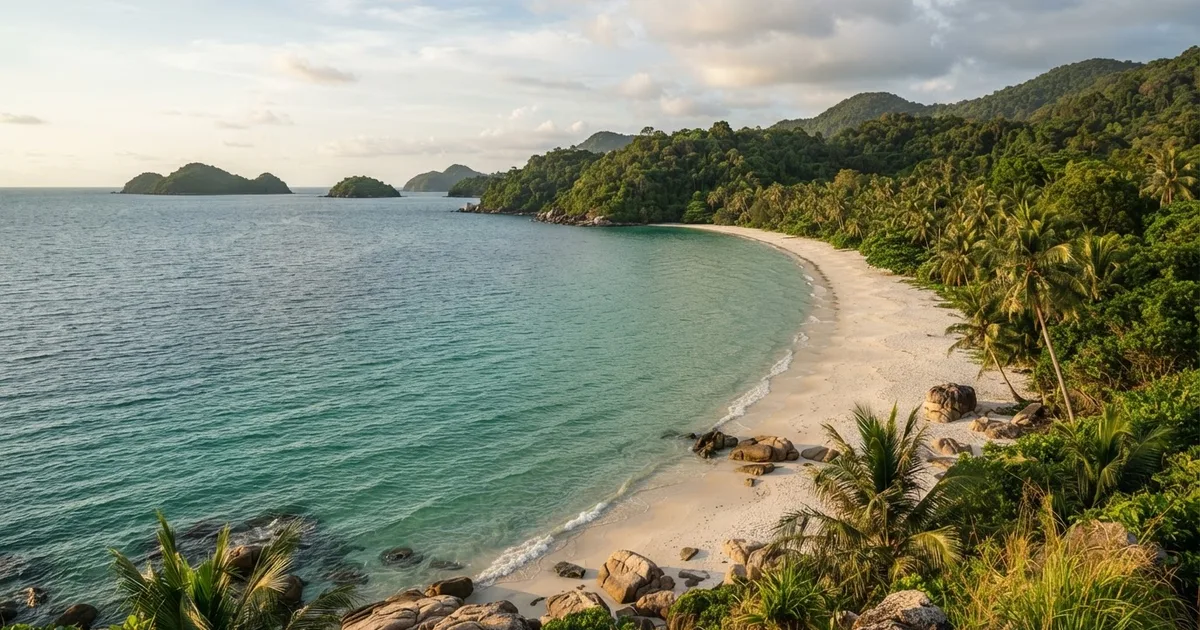
Phu Quoc sits inside airspace that Vietnam formally lists as prohibited, so drone operations there technically require a formal request and an official flight license issued through the Ministry of National Defence. In practice, recreational drones under 250 g may be flown outside restricted zones without a permit — but from 20 July 2026 a new national registration system applies, and flights near the airport, ports, military sites or crowds such as Sunset Town are banned and fined.
Is Phu Quoc Really a No-Fly Zone for Drones?
On paper, the answer is stricter than most travel forums suggest. Phu Quoc appears on Vietnam's list of prohibited airspace, which means drone operations there require a formal request and an official flight license before takeoff. The authority that grants most Vietnamese drone permits is the Ministry of National Defence, and applications must be submitted at least seven days before your intended flight — realistically seven to 14 days in advance to allow for questions, corrections and back-and-forth with the authorities.
In practice, enforcement is uneven. Up-to-date references — the main drone-rules page covering the island was last updated on 1 June 2026 — describe Phu Quoc as fine for drones except near the airport. What that means on the ground: hobbyists do launch from quiet beaches, but unpermitted flights remain illegal, and if something goes wrong — a complaint from a resort, a security patrol, an incident — the operator carrying an unpermitted aircraft carries the full legal risk. For foreign visitors, that risk is amplified by language barriers and by the simple fact that you cannot talk your way through a document check without documents.
The pragmatic reading is this: if you are flying anything over 250 g, filming commercially, or launching anywhere near the airport, ports, military sites or crowds, you need a permit, full stop. If you are flying a sub-250 g drone for personal use, well away from all of those areas, you are in the narrow gray zone the rules carve out — and from 20 July 2026, new registration requirements are designed to shrink that gray zone considerably.
The 250 g Rule and Vietnam's New Registration System (From 20 July 2026)
Vietnam draws its most important line at 250 grams. Recreational drones under 250 g may not require a flight permit when flown outside prohibited or restricted zones. Above 250 g, a flight permit is generally required for commercial filming or for flights in scenic, urban, coastal or sensitive areas — a description that covers most of Phu Quoc's most attractive coastline, from Long Beach to the An Thoi archipelago.
The second big change is administrative. On 20 July 2026, Vietnam's drone registration system moved to a national system run by the Ministry of Public Security. From that date, registration, an official ID number and local compliance rules may still apply even to sub-250 g drones. In other words, the old assumption that a light drone is an anonymous drone no longer holds — if you travel to Phu Quoc with a sub-250 g aircraft after that date, check the current registration requirements before you pack it.
| Your situation | What is required | Notes |
|---|---|---|
| Recreational flight, drone under 250 g, outside restricted zones | Flight permit may not be required | From 20 July 2026, national registration and an ID number via the Ministry of Public Security may still apply |
| Drone over 250 g, or any commercial filming | Flight permit generally required | Scenic, urban, coastal and sensitive areas all count — Phu Quoc's coast qualifies on all fronts |
| Any drone near the airport, ports or military sites | Prohibited | Banned or fined regardless of drone weight or permit status |
Where You Cannot Fly: No-Fly Zones and Commonly Fined Spots
The list of restricted locations around Phu Quoc is easy to remember because it clusters around three things: aircraft, military and people. Phu Quoc International Airport sits directly beside Duong Dong and the northern stretch of Long Beach, so approach and departure paths pass over built-up beach strips — the airport exclusion is not a technicality, it covers a lot of the island's most convenient flying ground. Ports, military installations and crowds are likewise described as banned-or-fined territory.
Three spots are specifically named as bad ideas for drone flights: Sunset Town in the far south, the Hon Thom cable car, and the Duong Dong night market. All three combine dense crowds, visible security staff and, in Sunset Town's case, evening drone and light shows of their own — meaning any unexplained aircraft in the sky there attracts attention very quickly. Fines and confiscation are the realistic outcomes, not just a warning.
How to Get a Drone Permit for Phu Quoc
Most Vietnamese drone flight permits are granted by the Ministry of National Defence, and foreign operators cannot apply alone: you need a Vietnamese guarantor. In practice that is a local business or individual — a tour operator, a production fixer, a hotel or a rental company — who co-signs and vouches for your flight. Applications must be lodged at least seven days before the flight date, but a practical lead time of 7–14 days is strongly advised, especially for first-time applicants whose paperwork may need revision.
- Confirm your drone's weight class and check whether your planned launch and flight area falls inside a prohibited or restricted zone.
- Secure a Vietnamese guarantor willing to sponsor your application.
- Prepare your file: drone make, model and serial number, your passport details, a flight plan with locations, dates and altitudes below 120 m, the purpose of the flight, and liability insurance if you have it.
- Submit at least 7 days before your flight date — target 7–14 days to be safe.
- Carry printed copies of the approval with you, and fly only the approved plan, within daylight hours of roughly 6:00 AM to 6:00 PM.
Set expectations realistically: approvals for foreign tourists are possible, but not guaranteed, and the process favors defined, professional shoot plans over vague sightseeing intentions. Many visiting photographers with tight schedules end up hiring locally licensed operators instead of bringing their own aircraft — which also sidesteps customs questions on arrival.
The Rules of the Air: Altitude, Flying Hours and Etiquette
Wherever you legally fly in Vietnam, two hard limits apply. First, altitude: the nationwide maximum is 120 m above ground level — generous for landscape work, but easy to breach accidentally near rising terrain, so set a ceiling in your drone's app before takeoff. Second, time: flights are only permitted during daylight hours, typically 6:00 AM to 6:00 PM. Because Phu Quoc's sun sets at around 6:00 PM for much of the year, the classic golden-hour window is tighter than you might hope — plan to be airborne by 5:00 PM at the latest, and treat sunrise as your most reliable light.
Beyond the formal limits, basic etiquette protects both your equipment and the island's reputation for welcoming photographers: keep the drone within visual line of sight, never hover directly over people, and respect resort privacy — many beachfront properties on the west coast will (rightly) treat a camera at balcony height as a problem. And remember the core legal point: some guides note that tourists can fly drones in Vietnam with proper permits, but unpermitted flights are still illegal, whatever the enforcement situation looks like on any given beach.
Best Photo Spots in Phu Quoc — With or Without a Drone
Even if your drone stays in its case, Phu Quoc rewards a camera. The island's standouts are spread across both coasts, and each has a clear best-light window. Note the irony of the first row: the island's most photogenic development is also its most explicitly drone-unfriendly spot.
| Photo spot | Best light | Drone note |
|---|---|---|
| Sunset Town and Kiss Bridge (south coast) | Last hour before sunset | Do not fly — crowds and security; shoot the bridge's architecture over the sea from the waterfront instead |
| Đình Cậu temple, Duong Dong | Sunset | Classic silhouettes of rocks and fishing boats; the airport is close by, so this is no-fly territory |
| Sunset Sanato, west coast | Late afternoon | Sky-facing art installations on open ground — but verify current zone status before any launch |
| Bãi Sao (Starfish Beach), south-east | Sunrise | East-facing bay with calm, shallow water; one of the better early-morning options, far from the airport — still follow registration rules |
A practical rhythm that works well: sunrise at Bãi Sao on the east coast, a midday break, then late afternoon on the west coast at Sunset Sanato or Đình Cậu, finishing with the sunset itself. That single day covers the island's two best light directions without ever touching a restricted zone.
Should You Bring a Drone to Phu Quoc at All?
Honest answer: it depends heavily on what kind of traveler you are. The rules do not ban drones — they reward preparation and punish spontaneity.
Good fit
Licensed commercial shooters with a Vietnamese guarantor, two or more weeks of lead time and a defined shot list. Also experienced hobbyists flying sub-250 g aircraft who are willing to register under the new Ministry of Public Security system and stay well clear of the airport, ports and Sunset Town.
Less suited to
Casual travelers who want to pull a drone out at sunset on a whim — the 7–14 day permit lead time and the 6:00 PM flying cutoff simply do not match spontaneous travel. Also a poor fit if your plan involves the night market, the cable car or flying over crowds, or if your whole trip is shorter than the paperwork window.
Frequently Asked Questions
Do I need a permit for a sub-250 g drone like a DJI Mini in Phu Quoc?
Outside prohibited or restricted zones, a flight permit may not be required for recreational drones under 250 g. However, since 20 July 2026, Vietnam's national registration system run by the Ministry of Public Security means registration, an ID number and local compliance rules may still apply. Near the airport, ports or military sites, flying is banned regardless of your drone's weight.
How far in advance should I apply for a Vietnam drone permit?
The minimum is seven days before your flight date, but the practical lead time is 7–14 days. Most permits are granted by the Ministry of National Defence, and foreign operators must apply through a Vietnamese guarantor, which adds coordination time — start the process as soon as your travel dates are fixed.
What is the maximum altitude and allowed flying time in Vietnam?
The nationwide ceiling is 120 m above ground level, and flights are permitted only during daylight hours, typically 6:00 AM to 6:00 PM. Since Phu Quoc's sun sets around 6:00 PM much of the year, plan sunset shoots carefully — airborne by 5:00 PM — and consider sunrise sessions for the best reliable light.
Can I fly a drone at Sunset Town or over Kiss Bridge?
No. Sunset Town is specifically named as a place where flying a drone is a bad idea, alongside the cable car and the night market. The area combines dense crowds, private security and its own evening shows. Shoot the Kiss Bridge architecture from the waterfront at golden hour, or book a sunset boat for a sea-level angle instead.
What happens if I fly without a permit?
Unpermitted flights are illegal in Vietnam even where enforcement is relaxed. Realistic consequences include fines and confiscation of the aircraft, and penalties are more serious near the airport, ports or military sites. Some tourists do fly unpunished on quiet beaches, but the entire legal risk sits with the operator — and foreign visitors have the least room to maneuver in a document check.
Can foreign tourists get a drone permit for Phu Quoc?
Yes, but not alone. Foreign operators need a Vietnamese guarantor — such as a local agency, production fixer or business — and applications go to the Ministry of National Defence, which grants most permits. Submit at least seven days before flying, though 7–14 days is the realistic window, and include a defined flight plan with locations, dates and altitudes under 120 m.
Is Phu Quoc fine for drones apart from near the airport?
Current guides — updated as recently as 1 June 2026 — describe Phu Quoc as fine for drones except near the airport. But formally the island is listed as prohibited airspace, so a permit is technically required for drone operations. In addition to the airport, avoid ports, military sites, crowds, Sunset Town, the cable car and the night market.
What changed with drone registration on 20 July 2026?
Vietnam's drone registration moved to a national system run by the Ministry of Public Security. From that date, registration, an official ID number and local compliance rules may apply even to sub-250 g drones that previously fell outside the permit system. If you are traveling with a lightweight drone after this date, verify current registration requirements before you fly.
Planning a photo trip to Phu Quoc? Sabrina Rental can sort the ground game — a motorbike to reach Bãi Sao for sunrise, a boat for water-level sunset shots along the south coast, and current local advice on where you can and cannot fly. Tell us your dates and shot list, and we will help you build the day around the light.
Contact Sabrina Rental