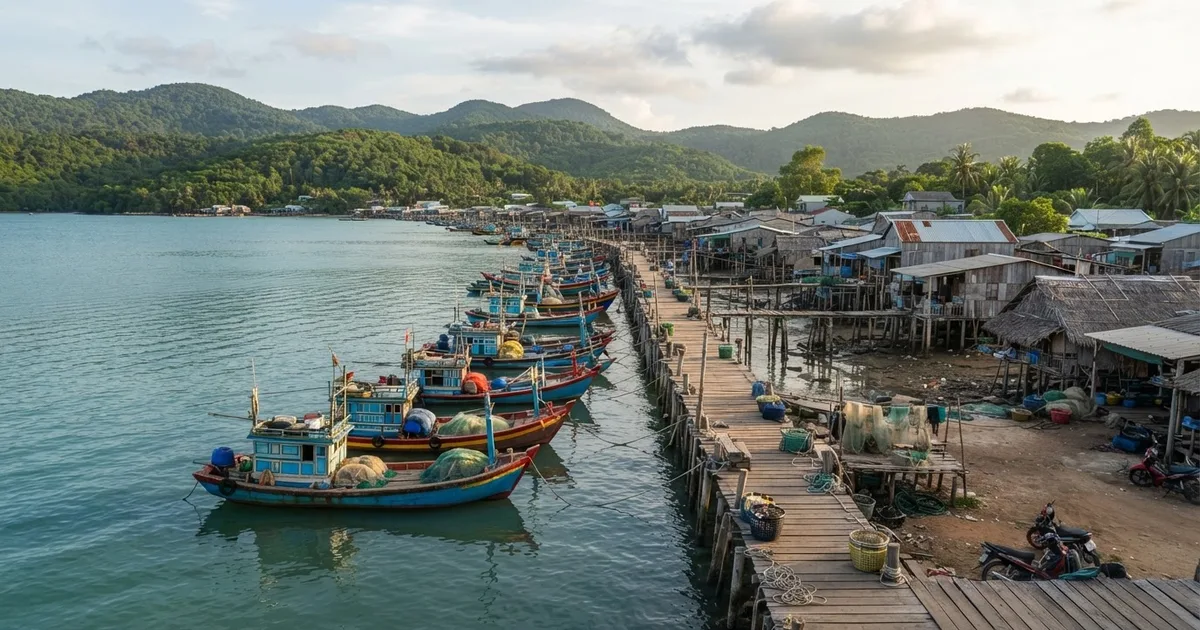
A one-week trip to Phu Quoc for two people costs roughly $1,000–$1,500 on the ground — rooms, food, transport and activities — before international flights. Backpackers can live on about $25 per person per day, budget travellers on $30–50, and a disciplined mid-range couple can keep their combined spend under $80 per day. The much-quoted average of $2,620 for a 7-day couple's trip only makes sense once you bundle in flights, beachfront resorts and organised tours.
What Does a Trip to Phu Quoc Actually Cost? The Headline Numbers
Phu Quoc is one of the few Vietnamese islands where a $9 dorm bed and a $400 villa sit on the same stretch of beach road. That spread is why published trip costs for the island vary so wildly — the same seven days can cost two people $700 or $4,000 depending on where they sleep and how they eat.
The most commonly quoted figures are these: a typical 7-day trip to Phu Quoc is priced at an average of $2,620 for a couple, with a realistic range of about $2,128 to $4,280. Those numbers come from trip-cost calculators that assume return flights, resort accommodation and paid tours. Strip out the flights and the resort and a self-planned trip looks completely different: a 3–4 day Phu Quoc itinerary organised independently comes in at roughly VND 5,000,000 (about $191.53) per person, excluding flights.
Package pricing tells the same story from the other direction. A week-long Phu Quoc summer escape for a couple — flights, beachfront resort, meals and activities included — sells from around ₹80,000 to ₹1,20,000, or roughly $960 to $1,440. That is a genuine all-in price, and it proves how much of the "average" cost is flights and hotel category rather than the island itself.
| Travel style | Daily budget (per person) | 7 days for two | What it buys |
|---|---|---|---|
| Backpacker | ~$25 | ~$350 | Hostel dorm, street food, shared or rented scooter |
| Budget | $30–50 | $420–700 | Private guesthouse double, local restaurants, own scooter |
| Mid-range | $80–120 quoted; under $80/day combined is achievable | $560–1,680 | 3-star hotel, mix of local and Western meals, one or two tours |
| Comfort / resort | $150+ | $2,100+ | 4–5 star resort, taxis, restaurant dining, VinWonders and the cable car |
One clarification on the mid-range line: the widely repeated $80–120 per day estimate usually assumes per-person spending with paid tours attached. A couple travelling mid-range — private room, scooter, mostly Vietnamese food, one boat trip — can realistically keep their combined daily spend under $80 without skipping any of the island's major sights.
Where the Money Actually Goes: A Daily Cost Breakdown
The backpacker maths for Phu Quoc is unusually clean, because three costs dominate everything else: a dorm bed at $8–12, local food at $8–10, and shared scooter transport at about $4. That totals roughly $25 per day, and it is the number long-stay travellers on the island genuinely live on.
Move up to a private room and the structure shifts. Accommodation stops being a rounding error and becomes 40–50% of your daily spend. Food stays cheap as long as you eat where locals eat, and transport stays cheap as long as you ride a scooter rather than take taxis. Activities are the wild card: a beach day costs nothing, while VinWonders plus the Hon Thom cable car can eat an entire day's budget in two hours.
| Cost category | Backpacker (per person) | Budget (per person) | Mid-range couple (combined) |
|---|---|---|---|
| Accommodation per night | $8–12 dorm | $10–20 private double | $35–50 double |
| Food and drink per day | $8–10 | $10–18 | $25–35 |
| Transport per day | ~$4 shared scooter | $4–8 scooter + petrol | $6–10 scooter + petrol |
| Activities per day | $0–5 | $3–10 | $10–20 |
| Daily total | ~$25 | $30–50 | $75–115 |
Note that the mid-range couple's combined total of $75–115 is already close to the "under $80" target at the bottom of the range. The difference between the two is almost entirely how often you eat in Western-facing restaurants and how many ticketed attractions you add. A couple who eats pho and banh mi for breakfast, seafood at the night market, and does one paid activity every second day lands comfortably inside $80/day together.
Rule of thumb: in Phu Quoc, every $10 you save on your room is worth more than every $10 you save on food. Accommodation is the only line item where the gap between budget and mid-range is a factor of three or four.
Accommodation Costs: The Single Biggest Variable
Where you sleep decides your entire budget. Phu Quoc accommodation spans dorm beds under $10 to private pool villas over $500, and the island has far more supply than most travellers expect, which keeps the low end genuinely cheap.
Vacation rentals — the apartments and houses booked through platforms rather than hotels — average $701 per week on Phu Quoc, based on user searches over a recent two-week window. That works out to roughly $100 a night, which sounds like mid-range money but often buys a whole apartment with a kitchen, sleeping four. Split between two couples, that is $50 per couple per night, and the kitchen alone can cut your food bill by a third.
| Type of stay | Typical nightly rate | Best for |
|---|---|---|
| Hostel dorm bed | $8–12 | Solo backpackers, social travellers |
| Budget guesthouse double | $15–25 | Couples on $30–50/day |
| 3-star hotel double | $30–50 | Mid-range couples |
| Vacation rental / apartment | ~$100 (avg. $701/week) | Groups of 3–4, longer stays, self-caterers |
| Beachfront 4–5 star resort | $150–400+ | Honeymoons, package deals |
Location matters as much as category. Staying in Duong Dong, the main town, puts you within walking distance of the night market, cheap restaurants and the ferry pier, and rooms there are consistently the island's best value. The resort strips at Long Beach, Ong Lang and Sao Beach charge a premium for the view and the quiet — and you will need a scooter or a taxi for every meal unless you eat at the hotel.
Who this is a poor fit for: if you want to walk out of your room into a beach bar with a cocktail menu, a $15 Duong Dong guesthouse will frustrate you — you will spend the difference on taxis and drinks. Conversely, if you are on a strict $25–30/day budget, booking a resort strip room "for one night as a treat" is the single most common way travellers blow their Phu Quoc budget.
Food and Drink: Where Phu Quoc Is Genuinely Cheap
Food is the line item where Phu Quoc rewards the budget traveller most. A bowl of pho or a banh mi from a local stall costs a dollar or two. A plate of rice with grilled pork, a fresh coconut, and a Vietnamese iced coffee will not take you past $6 for a full day of eating if you stick to local spots.
The $8–10 per day food figure used in backpacker budgets is not a hardship number — it is what you spend when you eat where the island eats. Duong Dong night market is the centre of it: grilled seafood, skewers, noodles and fruit, all priced per portion and visible before you order. Dinner for two, with drinks, routinely lands under $10.
Restaurant dining is a different scale. A Western-facing beach restaurant serving pizza, burgers or imported steak charges $8–15 per main, which triples your food spend on its own. There is nothing wrong with that — but if you eat Western twice a day, your $30/day budget becomes a $60/day budget without you noticing.
Cheap-eating checklist:
- Breakfast at a local stall: $1–2 (pho, banh mi, sticky rice)
- Lunch at a com binh dan (rice plate) shop: $2–3
- Dinner at Duong Dong night market: $3–5 per person
- Drinks: fresh coconut $1, sugarcane juice under $1, local beer $1–2
- Water: refill bottles rather than buying 500ml singles all day
Alcohol is the sneaky cost. A cocktail at a beach club can cost more than your room. Local beer at a corner shop costs a fraction of the same beer at a resort bar, and Phu Quoc's own fish sauce and pepper farms are free to visit — a genuinely free half-day out.
Transport on Phu Quoc: Scooters, Taxis and What They Cost
Phu Quoc has no public bus network worth planning around, so your transport choice is effectively scooter or taxi — and the price gap is enormous.
A rented scooter is the standard budget answer, and the backpacker figure of about $4 per day for shared scooter transport is accurate: a scooter rental typically runs $5–8 per day, petrol is a couple of dollars for a full tank, and splitting it between two people brings your individual cost down to roughly $4. That scooter then covers you for the whole island — Long Beach to Duong Dong is a 10–15 minute ride, and even the run down to Sao Beach is under an hour.
Taxis and ride-hailing are convenient but add up fast. A short in-town hop is a few dollars; a cross-island trip from Duong Dong to the northern beaches or the cable car station can be $15–25 each way. Two cross-island taxi trips a day would consume an entire budget traveller's daily allowance.
| Transport option | Typical cost | Notes |
|---|---|---|
| Scooter rental | $5–8 per day | Petrol extra, usually $2–3 for a full tank |
| Shared scooter (two people) | ~$4 per person per day | The standard backpacker line item |
| Short taxi / ride-hail in town | $2–5 | Fine for one-off trips |
| Cross-island taxi | $15–25 each way | Kills a budget day if used twice |
| Ferry to/from mainland | Varies by route and operator | Book ahead in high season |
If you are not comfortable riding a scooter, budget $10–15 per day for taxis and plan your days geographically — cluster your activities so you are not crossing the island twice. This is the one area where non-riders genuinely cannot hit the $25/day backpacker number.
Activities and Attractions: What Costs Money and What Does Not
Phu Quoc's best experiences are free. The beaches — Sao, Ong Lang, Long Beach, Ganh Dau — cost nothing but a scooter ride. The night market is free to wander. The pepper farms, fish sauce factories and the traditional fish sauce houses are free or near-free to visit, and they are a legitimate half-day of sightseeing.
The paid attractions are where budgets break. VinWonders, the island's large theme park, and the Hon Thom cable car — one of the longest over-sea cableways in the world — are each priced as full-day tickets, and doing both in one trip can cost a couple more than two nights of accommodation. Sunset cruises, squid fishing boats and island-hopping tours add $20–40 per person each.
The sensible approach for a budget or mid-range traveller is to pick one big-ticket attraction for the whole trip and treat everything else as free. A couple who does the cable car once and spends the rest of the week on beaches, markets and free farms will find their activity spend sits around $10–20 per day combined — exactly the mid-range column in the daily breakdown above.
Who this is a poor fit for: families with children who expect theme-park days, and travellers who measure a holiday by ticketed attractions, will find Phu Quoc's budget tiers restrictive. For those trips, the realistic figure is the $2,128–$4,280 couple's range, not the $1,000–$1,500 on-the-ground figure.
When to Go: How Season Changes Your Budget by 30–50%
Phu Quoc's dry season runs roughly November to April, with December to March as peak. This is when room rates are highest, ferries and flights are fullest, and the cheapest guesthouses get booked out weeks ahead. The wet season, May to October, brings afternoon downpours but also 30–50% lower accommodation rates and far more negotiating room on longer stays.
For a budget traveller, the shoulder weeks on either side of peak — late October/November and April/early May — are the sweet spot: dry enough for beach days, cheap enough that a $25/day backpacker budget and a $30–50/day budget traveller budget both hold comfortably. If your dates are flexible, shifting a trip by three weeks can save more than every other tip in this guide combined.
Book the room, not the flight, first. Flights to Phu Quoc swing far more than rooms do. Locking in a cheap fare and then choosing a shoulder-season week for accommodation is the highest-leverage budget decision you can make.
Three Sample Budgets: 7 Days in Phu Quoc for Two
Here is what a full week actually looks like at each level, for two people sharing, excluding international flights.
| Line item | Backpacker | Budget | Mid-range |
|---|---|---|---|
| Accommodation (7 nights) | $126–168 (dorm x2) | $105–175 (private double) | $245–350 (3-star double) |
| Food and drink | $112–140 | $140–250 | $175–245 |
| Transport | $56 | $56–112 | $42–70 |
| Activities | $0–70 | $40–140 | $70–140 |
| Total for two, 7 days | ~$300–430 | $340–680 | $530–800 |
Every one of those totals sits well below the $1,000–$1,500 on-the-ground figure quoted at the top, and that gap is deliberate: the $1,000–$1,500 band assumes comfortable hotels, restaurant meals, taxis when convenient, and at least one or two paid tours. It is the realistic number for a couple who wants a holiday rather than a budget exercise. The $2,620 average, by contrast, includes flights and resort accommodation — and the $2,128–$4,280 range is what that trip looks like when you vary the hotel category.
In other words, all the published numbers are true. They just describe different trips.
Frequently Asked Questions
How much does a day in Phu Quoc cost for a budget traveller?
Budget travellers can explore Phu Quoc for VND 800,000–1,200,000 per day, which is about $30.65–$45.97. That covers a private guesthouse double room, three local meals, a scooter with petrol, and a small amount left over for a paid activity every couple of days.
Can you really travel Phu Quoc on $25 a day?
Yes. The backpacker breakdown is $8–12 for a hostel dorm, $8–10 for local food, and about $4 for shared scooter transport, totalling roughly $25 per day. It assumes you eat at local stalls and night markets, share a scooter with another traveller, and stick to free beaches and markets.
How much should a couple budget for a week in Phu Quoc?
Roughly $1,000–$1,500 for two people for a week on the ground, excluding international flights. That covers comfortable accommodation, restaurant meals, a scooter or occasional taxis, and one or two paid tours. Published averages of $2,620 for a 7-day couple's trip include flights and resort accommodation.
Is Phu Quoc more expensive than the rest of Vietnam?
Accommodation and restaurant food on Phu Quoc are typically 20–40% higher than mainland cities like Da Nang or Nha Trang, because everything is ferried or flown in. Local street food and markets, however, remain close to mainland prices, which is why the $8–10 per day food budget still works.
How much does accommodation cost per night in Phu Quoc?
Hostel dorms run $8–12, budget guesthouse doubles $15–25, and 3-star hotel doubles $30–50. Vacation rentals average about $701 per week, or roughly $100 per night, which often buys an apartment with a kitchen that can sleep three or four people.
What is the cheapest way to get around Phu Quoc?
A rented scooter at $5–8 per day, split between two people, works out to about $4 per person per day plus $2–3 for a full tank of petrol. Taxis cost $2–5 for short in-town trips and $15–25 for cross-island journeys, so two taxi trips a day can double a budget traveller's daily spend.
When is the cheapest time to visit Phu Quoc?
The wet season from May to October brings 30–50% lower accommodation rates than the December–March peak. The shoulder weeks in late October/November and April/early May offer the best balance: mostly dry weather with prices still well below peak-season levels.
Do I need to pay for Phu Quoc's beaches and attractions?
No. Sao Beach, Ong Lang, Long Beach and Ganh Dau are all free, as are the night market and most pepper and fish sauce farm visits. The big paid attractions are VinWonders and the Hon Thom cable car, so budget for one of them rather than both if you are watching costs.
Planning your Phu Quoc budget and want local numbers rather than estimates? Sabrina Rental can help with scooter rental, rooms and island advice — message us with your dates and travel style and we will tell you what your trip will actually cost.
Ask Sabrina About Your Phu Quoc Budget