If your card is declined at a Phu Quoc ATM, do not retry the same machine — walk to the next bank's ATM, often about 50 metres away in Dương Đông, and try once there. Almost every failure on the island comes down to four fixable causes: the machine is out of cash, a daily limit has been reached, your card's overseas use is switched off, or the terminal's network logo is unsupported. Carry a backup card on a different network plus a cash reserve of 1,000,000–2,000,000 VND (about $40–80) and you can solve nearly every card problem in Phu Quoc within an hour.
Why ATMs and card payments fail in Phu Quoc
Phu Quoc's card infrastructure is thinner than in Ho Chi Minh City or Hanoi, and that shows up in two ways: machines that fail outright, and terminals that quietly cost you money. When an ATM says “unable to process,” the cause is almost always on the machine side — the cash cassette is empty, the machine is offline, or it simply doesn't support your card's network. When a card is declined everywhere, including at a hotel terminal, the cause is almost always on the issuer side: overseas use switched off in your app, a missing travel notice, or a fraud engine that doesn't recognize Vietnam.
Four causes cover nearly every failure on the island. Learn to tell them apart from the on-screen message and you'll fix the problem in one move instead of five:
| Cause | How it looks | Fastest fix |
|---|---|---|
| Machine out of cash or out of service | “Unable to process”, “out of service”, or no notes dispensed | Move to the next bank's ATM, about 50 m away in Dương Đông |
| Network logo unsupported | No Visa, Mastercard or Cirrus logo on the machine | Find a machine displaying your card's logo |
| Daily or per-transaction limit reached | “Amount not allowed” or repeated declines on large sums | Withdraw a smaller amount, e.g. 2,000,000 VND, and check your issuer's app |
| Issuer block (overseas use off, missing travel notice, fraud flag) | Declined at every ATM and shop terminal | Check issuer alerts and settings, then call the number printed on your card |
| DCC markup | Terminal asks “Charge in USD/EUR?” | Always choose VND |
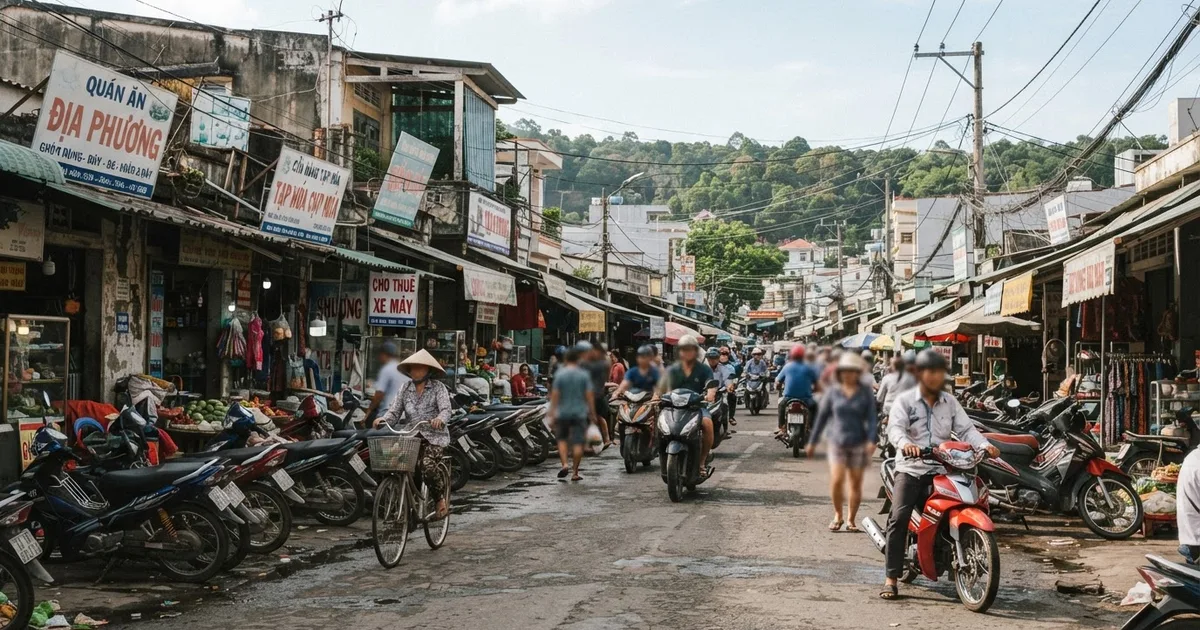
One Phu Quoc-specific wrinkle: standalone machines in tourist zones — around the Dương Đông night market, on the beach roads, at Grand World in the north and Sunset Town in the south — empty fast on weekends and before Vietnamese holidays such as Tết, when locals withdraw cash in bulk. A machine that worked yesterday morning can be dry by evening.
The 60-second routine that fixes most declines
Work down this list in order. The single most important rule: never repeat the same transaction on the same machine. Repeated declines look identical to fraud attempts in your bank's system, and some issuers automatically lock a card after three failed attempts abroad.
- Read the exact on-screen message and photograph it — “unable to process” (a machine problem) and “declined” (a card problem) need different fixes.
- Walk to a different bank's ATM about 50 metres away and try once. One retry per machine only.
- Drop the amount: try 2,000,000 VND instead of 5,000,000 — many machines cap foreign cards per transaction.
- Open your issuer's app or SMS alerts: check available balance, the overseas-use setting, and any fraud alerts or travel-notice requests.
- Switch to your backup card on a different network (Visa ↔ Mastercard).
- If it still fails, call the issuer using the number printed on the card or the official app — but first note the ATM operator, the branch address or landmark, and the exact time of the failed transaction.
- Still stuck? Pay in cash from your reserve and sort out the flagged card later — don't burn your day at machines.
If a foreign card is declined, resist the urge to hammer the same ATM. Move to a different bank's machine — in central Dương Đông you're rarely more than 50 metres from the next one — and if that fails too, stop touching machines and check your issuer's app. The app will tell you in seconds whether it's a balance issue, a settings issue, or a fraud hold.
Where to find reliable ATMs in Dương Đông and around the island
The most dependable machines in Phu Quoc are attached to bank branches, because they're restocked and serviced regularly and — crucially — there are humans inside if something goes wrong. In Dương Đông, the island's main town, the big banks cluster along 30 Tháng 4 and Trần Hưng Đạo: Vietcombank, VietinBank, BIDV, Agribank, Techcombank, MB Bank, VPBank and Sacombank all have branches with ATMs out front. Vincom Plaza Phu Quoc, the main mall, has several banks' machines under one roof.
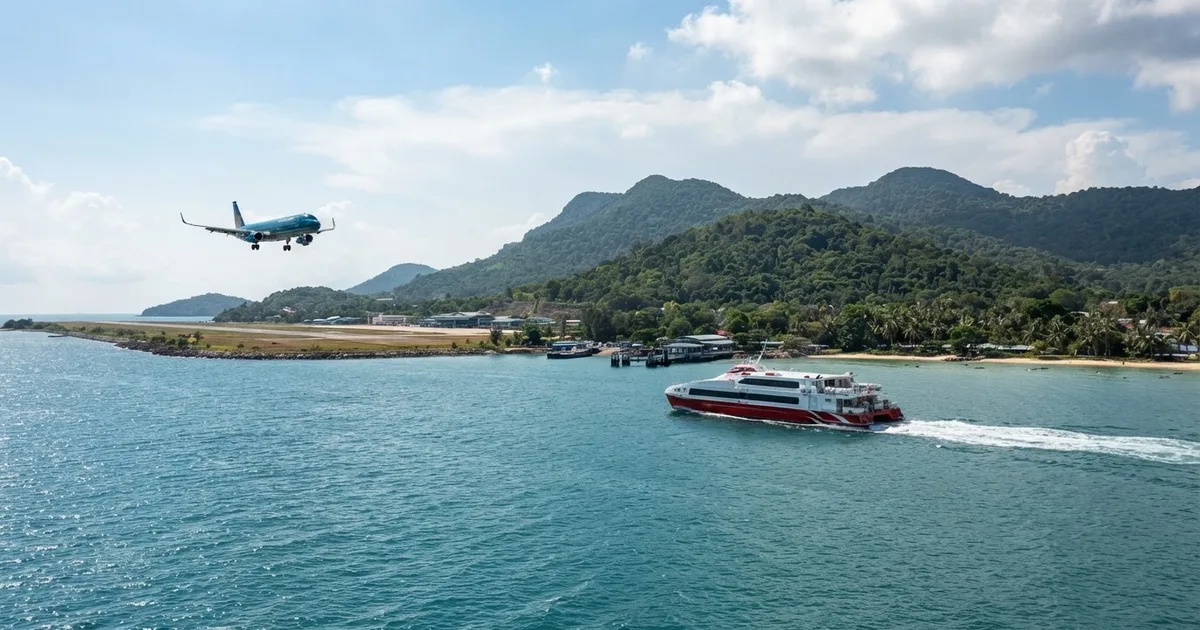
Phu Quoc International Airport (PQC) has ATMs inside the terminal — fine for a first 2,000,000 VND on arrival, but they're heavily used and can be dry at peak times. For serious withdrawals, the 10-minute ride into Dương Đông gets you to branch machines. If you're heading south to An Thới and Sunset Town, or north to Grand World and the northern beaches, top up before you go: branch density drops sharply outside Dương Đông.
Banking hours matter more than most travelers expect. Vietnamese branches typically open Monday–Friday, roughly 08:00–11:30 and 13:00–16:30, with some branches also open Saturday morning. If a machine ever keeps your card, a branch-attached machine during those hours is your rescue window — staff can usually retrieve it the same day.
The DCC trap: always choose VND, never USD or EUR
When a card terminal or ATM offers to charge you in your home currency — “Charge in USD?”, “Convert to EUR?” — that's dynamic currency conversion, and it's almost always a bad deal. DCC exchange rates are typically 3–7% worse than what your own bank charges, and your bank may add its foreign-transaction fee on top of the inflated rate. With the Vietnamese dong trading around 25,000–26,000 VND to the US dollar, a 5% DCC markup on a 10,000,000 VND hotel bill quietly costs you about $20.
The rule is one word long: VND. Choose the local currency at every ATM and every card terminal, let your own bank do the conversion, and check the rate your card actually applied in its app afterwards. The same logic applies to cash: some tourist shops accept USD bills, but they give change in VND at the shop's own rate — worse than any licensed exchange counter in Dương Đông.
If the ATM keeps your card
First, do not try to lever the card out with fingers, keys or anything sharper — you can damage the reader and turn a recoverable card into a cancelled one. Machines hold cards when the network drops mid-transaction, when the PIN is entered wrong too many times, or when an anti-skimming device triggers. It feels personal; it isn't.
Immediately note three things: the bank name on the machine, the branch address or a landmark, and the time. Then call the number printed on the card or the machine. If the machine is attached to a branch and it's during banking hours (roughly 08:00–16:30, weekdays), go inside — staff can usually open the machine and return your card the same day once you show ID and the name matches. Standalone machines are slower: a technician has to be scheduled, which can take several days.
If the timeline doesn't work for you, block the card through your issuer's app or hotline and switch to your backup card. Two numbers worth saving before any trip to Vietnam: Visa Global Customer Assistance, +1-303-967-1090, and Mastercard Global Service, +1-636-722-7111 — both accept collect calls and can arrange emergency card replacement or emergency cash in some cases.
Who gets burned most — and the backup setup that prevents it
Card trouble in Phu Quoc isn't random; it correlates with how long you're on the island and how cash-dependent your plans are. The fixes in this guide are a poor fit for exactly one group: travelers who carry no backup card and no cash and expect card payments to work everywhere. On this island that combination fails at the night market, at the street-food stalls, and in half the taxis.
Short stays (2–4 days)
Highest risk: no weekday left to visit a branch if a card locks. Land with two cards on different networks and withdraw 2,000,000–4,000,000 VND on day one.
Long stays and remote workers
You can visit a bank branch on a weekday (08:00–16:30) to unblock a card or retrieve an eaten one, so a single card is workable — but a backup still saves hours.
Card-only travelers
A poor fit for Phu Quoc: night-market stalls, street food, many taxis and small shops are cash-only. Cards work at hotels, resorts, larger restaurants and supermarkets — nowhere near everywhere.
Cruise and transit visitors
Only hours on the island and no branch access. Use the airport terminal ATMs for a first 2,000,000 VND, and exchange a small amount of cash at the airport counter as insurance.
Whatever your travel style, the core setup is the same: two cards on different networks (a Visa and a Mastercard, so a single network outage can't take out both), a cash reserve of 1,000,000–2,000,000 VND kept separately from your main wallet, and your issuer's overseas-use setting switched on with a travel notice filed before you fly.
The last resort that always works: cash
If every ATM on the island seems to hate you, cash exchange still works. Banks and licensed exchange counters in Dương Đông change USD, EUR and AUD at rates close to the market rate — bring your passport and crisp, undamaged bills, because Vietnamese banks routinely reject torn, taped or heavily marked notes. Gold and jewelry shops in town also exchange major currencies, often competitively, but photograph the posted rate and check it against a currency app before handing anything over.
As a same-day stopgap, many hotels will advance a small amount against your card — expect an unfavorable rate, so treat it as fuel money for 500,000 VND, not a way to fund a week. And keep the reserve rule sacred: 1,000,000–2,000,000 VND (about $40–80) in a separate pocket means an ATM outage is an inconvenience, not a crisis.
Frequently Asked Questions
Why does the ATM keep saying “unable to process”?
Usually the machine itself: it's out of cash, offline, or doesn't support your card's network logo. Don't retry the same machine — walk to the next bank's ATM, typically about 50 metres away in Dương Đông, and try once. Mornings are best because branch machines are freshly restocked; machines near the night market run dry on weekend evenings and before Tết.
How much can I withdraw per transaction in Vietnam?
Many Vietnamese ATMs cap foreign cards at about 2,000,000 VND (roughly $80) per transaction, so a bigger withdrawal means repeating the transaction several times. Some machines allow 4,000,000–10,000,000 VND. Your own bank's daily limit may be lower, and many machines charge foreign cards a fee of about 40,000–60,000 VND or roughly 3%, shown on screen before you confirm.
My card was declined but I have money in the account — why?
The usual culprits: overseas use is switched off in your card app, no travel notice was filed, a fraud hold flagged the “unusual location,” or you've hit your daily limit. Check your issuer's alerts and settings first, then call the number printed on the card. Before calling, note the ATM operator, the branch address or landmark, and the exact time of the failed transaction.
Should I choose VND or USD when the terminal asks?
Always VND. The offer to pay in USD or EUR is dynamic currency conversion, with rates typically 3–7% worse than your bank's, plus possible extra fees. With the dong around 25,000–26,000 VND per US dollar, that markup costs real money on hotel-sized bills. Decline conversion, pay in VND, and let your own bank do the exchange.
The ATM kept my card — how do I get it back?
Don't force it out. Note the bank name on the machine, the address or landmark, and the time, then call the bank immediately. At a branch-attached machine during banking hours (roughly 08:00–16:30 weekdays), staff can usually retrieve the card the same day once you show ID. Standalone machines can take several days. If you can't wait, block the card in your issuer's app and use your backup card.
Are there ATMs at Phu Quoc airport?
Yes — Phu Quoc International Airport (PQC) has ATMs in the terminal, handy for a first 2,000,000 VND on landing. They're heavily used and can be dry at peak arrival times, so treat them as a stopgap. For reliable machines, head to the bank branches in Dương Đông, about 10 minutes away by taxi or scooter.
Can I pay by card everywhere in Phu Quoc?
No. Hotels, resorts, larger restaurants, dive shops and supermarkets take cards, but the night market, street-food stalls, many taxis and small family shops are cash-only. Budget at least 1,000,000–2,000,000 VND (about $40–80) in cash per couple per day for the cash-only side of the island.
No ATM works and I'm out of cash — what now?
Exchange physical USD, EUR or AUD at a bank or licensed counter in Dương Đông — bring your passport and clean, undamaged bills, as Vietnamese banks reject damaged notes. Many hotels also advance small amounts against a card at a poor rate. Or contact Sabrina Rental's local team: we'll point you to the nearest machine that's actually stocked.
Card playing up in Phu Quoc? Sabrina Rental's local team knows which Dương Đông machines are stocked, can help with translation at the bank counter, and can deliver a scooter to get you there fast. Message us and we'll sort you out.
Get Local Help