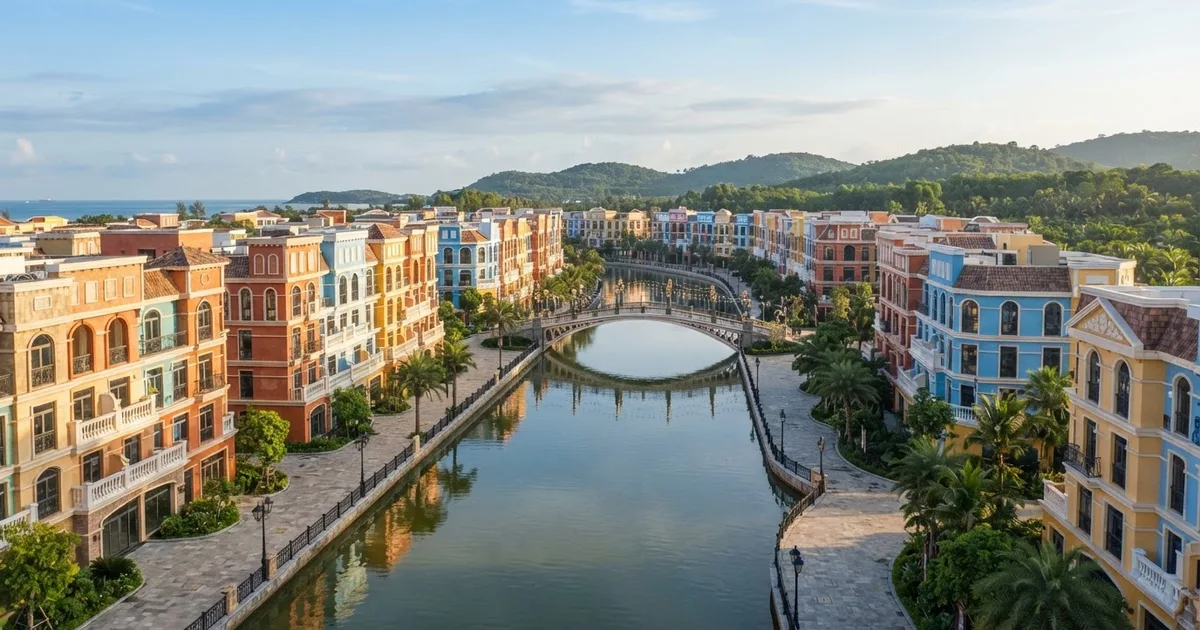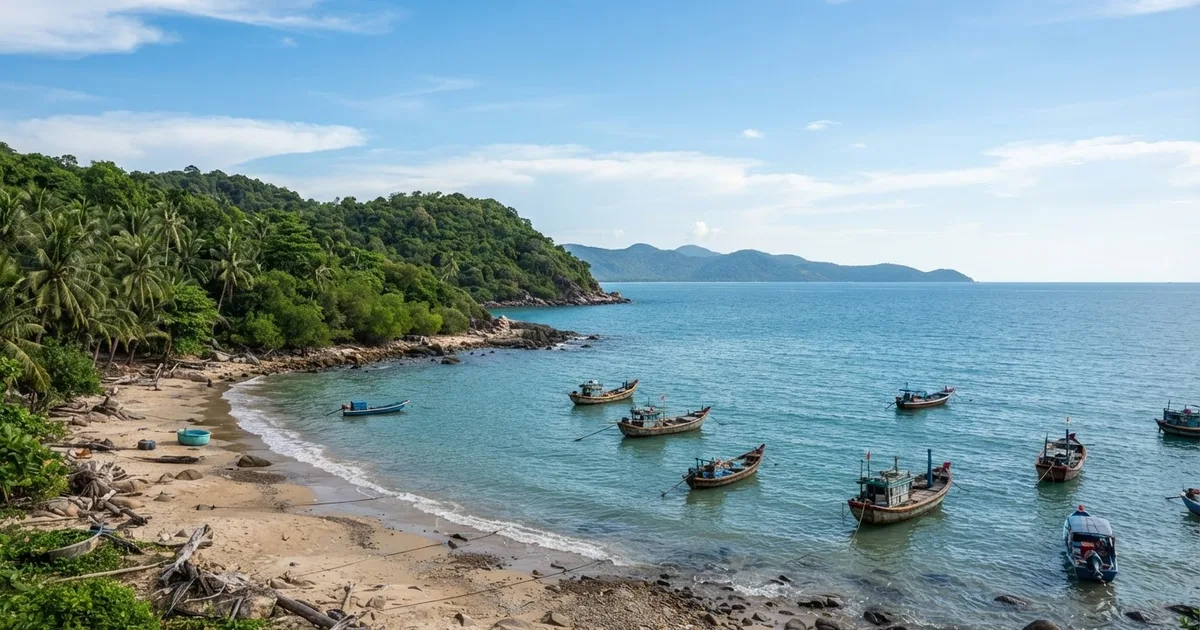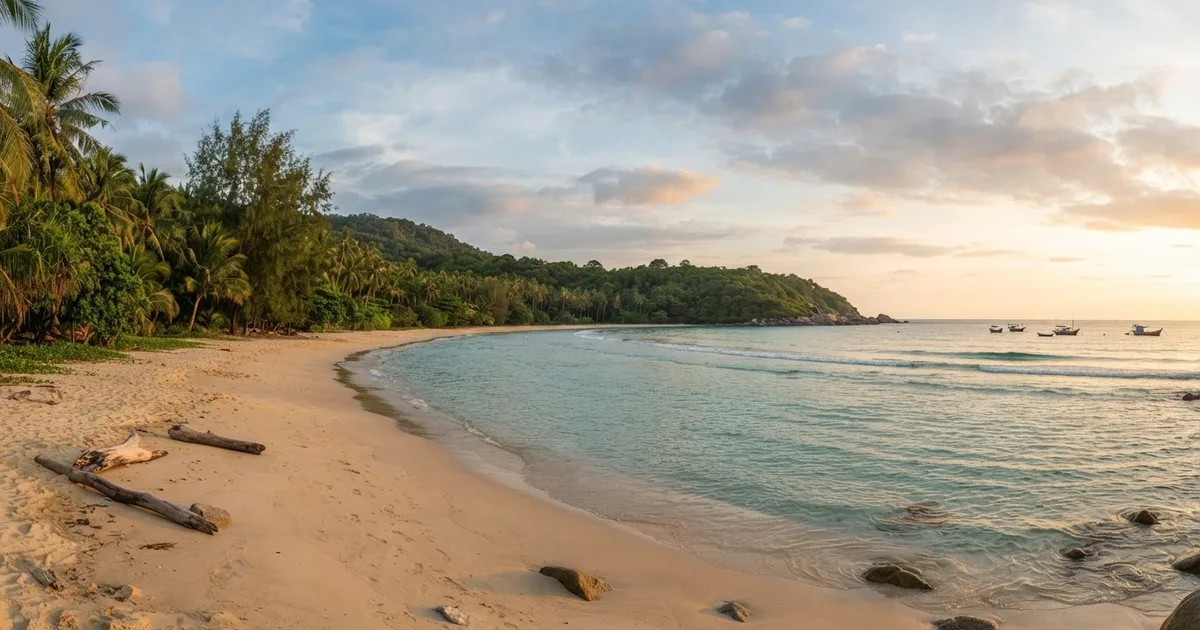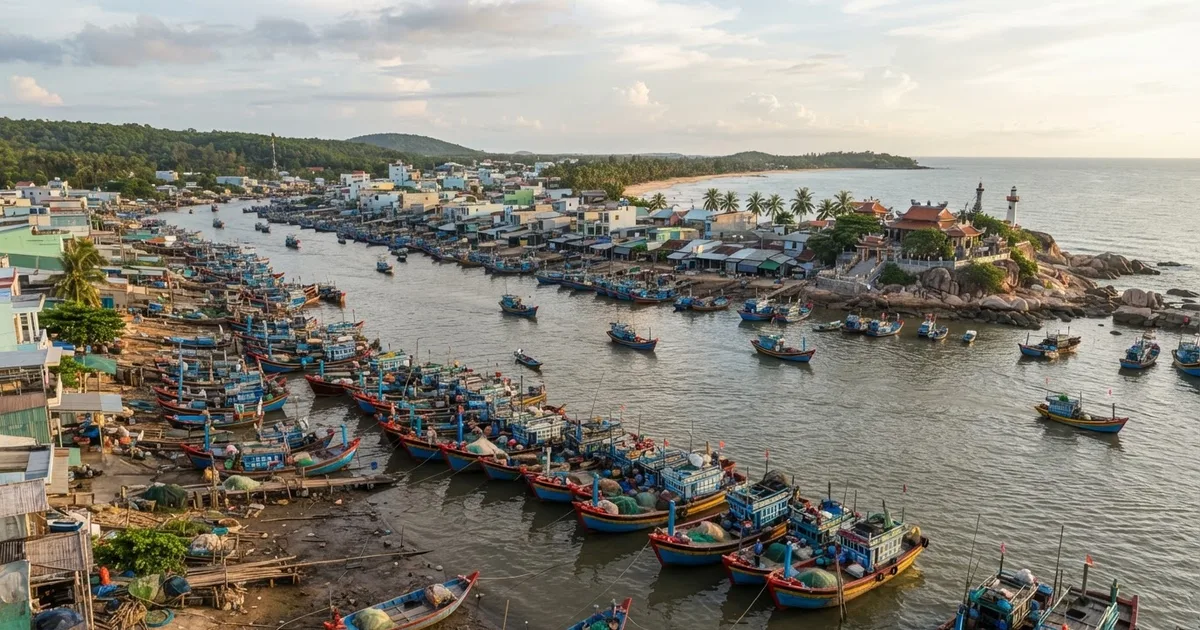
An Thoi and Duong Dong sit roughly 30-35 km apart at opposite ends of Phu Quoc's developed south-west coast, and the journey takes 45-70 minutes door to door. Expect to pay about 400,000-550,000 VND ($16-22) for a taxi or Grab car one way, 30,000-50,000 VND for the public bus, or little more than fuel money - around 35,000 VND each way - if you rent a motorbike at 150,000-250,000 VND per day.
How far is An Thoi from Duong Dong - and which route should you take?
An Thoi is Phu Quoc's southernmost town, home to the harbour where island-hopping boats depart, the terminus of the famous 7,899-metre over-sea cable car to Hon Thom, and Bai Vong port where ferries from the mainland dock. Duong Dong, 30-35 km to the north-west, is the island's capital and practical centre: the night market, Dinh Cau temple, the fish-sauce quarter and most of the island's restaurants are here, and Phu Quoc International Airport (PQC) sits just 10 km east of town.
There are two realistic routes between them. The inland route follows Nguyen Van Cu (part of provincial road DT47) in an almost straight line: about 30 km, two lanes of good asphalt, passing the airport area on the way. A car does it in 45-55 minutes, a motorbike in 50-60. There is little scenery, but it is the fastest option and by far the better choice in rain.
The coastal route leaves Duong Dong on Tran Hung Dao road and runs the length of Long Beach (Bai Truong) - roughly 20 km of resorts, beach bars and sunset viewpoints - before curving past the Khem Beach resort zone and down to An Thoi. It is longer, about 35 km, and takes 60-75 minutes, but it is the ride worth doing: the ocean stays on your right the whole way, and if you time it for late afternoon you get the island's best sunset drive as a bonus.
Because the airport sits roughly midway - about 10 km from Duong Dong and 25 km from An Thoi - both routes connect easily if you are combining this transfer with a flight in either direction.
Every way to get from An Thoi to Duong Dong, compared
Phu Quoc has no train and no ride-hailing alternatives beyond Grab, so your realistic choices come down to six. Here is how they stack up on time, cost and suitability:
| Option | Door-to-door time | One-way cost | Best for |
|---|---|---|---|
| Metered taxi (Mai Linh, Vinasun) | 40-50 min | 400,000-550,000 VND ($16-22) | Comfort, luggage, arriving at the pier |
| Grab car | 40-55 min | 350,000-500,000 VND ($14-20) | Fixed price, no haggling |
| Grab bike | 55-70 min | 150,000-220,000 VND ($6-9) | Solo travellers with a light bag |
| Public bus | 60-75 min | 30,000-50,000 VND ($1.50-2) | Budget travellers with a backpack |
| Motorbike rental | 50-70 min | 150,000-250,000 VND/day + ~35,000 VND fuel | Confident riders who want freedom to stop |
| Private car with driver | 45-60 min | 500,000-700,000 VND | Groups of 3-4, families, day tours |
One option you can mostly rule out is the self-drive rental car. Vietnam does not recognise most foreign driving licences for cars, genuine self-drive rentals are rare on the island, and police checks are routine - which is exactly why the motorbike-and-taxi economy dominates Phu Quoc transport. For most visitors the real decision is between a one-off transfer (taxi, Grab or bus) and renting a bike for a day or more and doing the trip on your own schedule.
By motorbike: the local default, and the cheapest way to do it properly
Renting a scooter is how most travellers move around Phu Quoc. A 110-125 cc semi-automatic (Honda Vision or Click style) costs 150,000-250,000 VND ($6-10) per day, with discounts for a week or longer. Fuel runs about 25,000 VND per litre, and the trip burns roughly 1.5 litres each way - call it 35,000-40,000 VND per leg. Even a same-day return costs less than one taxi fare.
Route choice matters. Take the coastal Tran Hung Dao road if the weather is clear and you want to stop: Long Beach is lined with cafes and beach clubs, and the stretch past Khem Beach is the prettiest driving on the island. Take the inland Nguyen Van Cu route if it is raining or you are in a hurry - it is shorter, straighter, and drains better after storms.
Road conditions are generally good, with a few honest warnings: sand washes onto the coastal road near beach entrances, speed bumps appear without warning at village clusters, and free-roaming dogs are a real hazard at dusk. Be honest with yourself about whether this option suits you. It is a poor fit if you have never ridden a scooter before, if you are travelling with children too young to ride pillion, if you are carrying large luggage, or if your transfer will happen after dark - long stretches between the two towns have no street lighting at all. Note also that riding anything over 50 cc technically requires a Vietnamese-recognised motorcycle licence, police do run checks, and most travel insurance excludes unlicensed riding.
By taxi or Grab: easiest door to door
Metered taxis from Mai Linh and Vinasun run across the whole island. Flag fall is around 12,000-15,000 VND and the per-kilometre rate for a four-seater is roughly 15,000-17,000 VND, so the 30-35 km run to Duong Dong lands at 400,000-550,000 VND ($16-22) on the meter. Make sure the driver starts the meter; if a driver insists on a fixed price instead, treat it as a negotiation starting well below their first number.
Grab works on Phu Quoc for both cars and motorbikes. A Grab car typically prices at 350,000-500,000 VND for this route, a Grab bike at 150,000-220,000 VND. The catch is supply: driver coverage in An Thoi is thinner than in Duong Dong, so allow 5-15 minutes of waiting, or walk toward An Thoi market or the main road before booking to cut the pickup time.
If you have just stepped off a mainland ferry at Bai Vong port, expect drivers loitering at the gate to quote 600,000 VND or more for the trip north. The reliable moves are to open the app and book there, or walk 200-300 metres out to the main road and flag a passing metered cab. Late at night, app prices rise noticeably - another reason to schedule this transfer before dark.
By public bus: the 30,000-50,000 VND option
Phu Quoc's green-and-white public buses connect Duong Dong's bus station with An Thoi throughout the day, departing roughly every 30-60 minutes between about 6:00 am and 6:00 pm. Fares are charged by distance and most rides on this route cost 30,000-50,000 VND ($1.50-2), paid in cash to the conductor - keep small notes handy. Buses stop on request along the main road, so you rarely need to find a formal stop; just stand at the roadside and wave.
The trade-offs are real, though. Journey time is 60-75 minutes because the bus stops constantly, there is essentially no luggage space, and the last departures leave in the early evening. The bus is a poor fit if you are carrying suitcases, surf gear or a family's worth of beach equipment, or if you land on a late flight - in those cases a taxi or pre-arranged car is worth every dong. For a backpacker moving from an An Thoi guesthouse to a Duong Dong hostel, it is unbeatable value.
Private car with driver: when it is worth the extra
A private car transfer with driver costs 500,000-700,000 VND one way, arranged through your hotel, a tour desk or a rental agency. On paper that is more than a taxi, but the maths changes for groups: for three or four people with luggage, it splits to 125,000-175,000 VND per person and everyone travels together in air conditioning.
Where a private car really earns its price is as a day charter. For around 1,000,000-1,300,000 VND for the day, a driver will chain together the classic southern loop: a morning boat trip to the An Thoi archipelago from the pier, the Hon Thom cable car - at 7,899 metres one of the longest over-sea cable cars in the world - a stop at Sao Beach on the east coast, and a sunset return to Duong Dong. That is impossible on the bus and impractical on one scooter for a family.
It is also the sensible choice if your flight leaves PQC on the same day you check out of an An Thoi resort: the driver does An Thoi - Duong Dong sightseeing or lunch, then drops you at the terminal 25 km up the road, timed to your departure.
Timing the trip: seasons, ferries and the sunset factor
Phu Quoc's dry season runs roughly November to April, with calm seas and reliable weather - the months when An Thoi's island-hopping boats run daily and the coastal road is at its best. The rainy season peaks around September-November with short, intense afternoon downpours that flood sections of road; if you are travelling then, schedule your transfer for the morning and take the inland route.
Ferry arrivals shape many itineraries. Boats from Ha Tien on the mainland (about 2 hours 15 minutes) and faster speedboats dock at Bai Vong port just outside An Thoi, which makes the An Thoi-to-Duong Dong transfer the standard first leg for overland arrivals. Most ferries dock by mid-afternoon, so a same-day bus or taxi onward is easy - just do not cut it close to sunset.
And the sunset genuinely matters here. Duong Dong faces west, and the whole waterfront from Dinh Cau temple to the night market on Bach Dang street turns gold between about 5:30 and 6:15 pm year-round. If you are riding, leave An Thoi by 4:30 pm: you will roll into town with daylight to spare, park near the harbour, and walk straight into the evening market. After dark, do not ride - take a taxi or Grab for the return leg.
Where to eat in Duong Dong when you arrive
Arriving hungry is part of the plan. Duong Dong is the best eating town on the island, and it works at every budget. On the street level, banh mi from the carts costs 25,000-45,000 VND, a bowl of pho or bun noodles runs 35,000-60,000 VND, and com tam (broken-rice plate) at lunch stalls goes for 40,000-70,000 VND. In the local quarter, breakfast noodle soup and com tam rarely top 30,000 VND a plate, and a family of four can eat well at stalls along the main road for under 200,000 VND total.
If you want to sit down after the ride, the town's table-service scene is deep - Tripadvisor's rankings, refreshed in September 2026, are dominated by seafood and barbecue. These are the reliable picks within a short ride of the night market:
| Restaurant | Cuisine | Address | Hours |
|---|---|---|---|
| Crab House | Seafood, crab-focused (200,000-400,000 VND / $8-16 per meal) | 26 Nguyen Trai | 11:00-22:00 daily |
| Bup Restaurant | Traditional Vietnamese and seafood | 108 30/4 Street | 10:00-23:00 daily |
| Saigonese Eatery | Modern Vietnamese and vegetarian | 9 30/4 Street | 11:00-22:00 daily |
| The Spice House at Cassia Cottage | Vietnamese and international | Cassia Cottage resort | 07:00-22:00 daily |
| Winston's Burgers & Beer | Burgers and craft beer | 121 Tran Hung Dao | 12:00-21:00 daily |
| Ganesh Indian Restaurant | Indian - tandoori and curries | 97 Tran Hung Dao | 10:00-23:00 daily |
| BO Restaurant & Coffee | Vietnamese cafe and coffee | 100/4 Tran Hung Dao | 08:00-22:00 daily |
| Mediterran Greek & Italian | Greek and Italian | 24 Tran Hung Dao | 12:30-22:30 daily |
| Lobster Cave Seafood (Dong Tom Hum) | Seafood and lobster | 30 Bach Dang | 10:00-23:00 daily |
| On The Rock | Vietnamese and European (300,000-600,000 VND / $12-24) | Cliffside, short ride from town | Lunch and dinner |
A practical pattern for a one-day visit: ride or taxi in by mid-afternoon, eat street food around the night market from 5 pm, then finish with crab at Crab House on Nguyen Trai or lobster at Lobster Cave on Bach Dang before the ride back - by taxi, not scooter, after dark.
Frequently Asked Questions
How far is An Thoi from Duong Dong?
About 30 km by the inland Nguyen Van Cu route (DT47) and 35 km by the coastal Tran Hung Dao road through Long Beach. Door to door, the trip takes 45-70 minutes depending on your mode of transport and which route you choose.
How much does a taxi from An Thoi to Duong Dong cost?
A metered taxi costs roughly 400,000-550,000 VND ($16-22) for the 30-35 km trip, based on a flag fall of 12,000-15,000 VND and a rate of about 15,000-17,000 VND per kilometre. Grab cars usually price slightly lower at 350,000-500,000 VND.
Is there a bus from An Thoi to Duong Dong?
Yes. Public buses run between the two towns roughly every 30-60 minutes from about 6:00 am to 6:00 pm, charging 30,000-50,000 VND ($1.50-2) by distance. The journey takes 60-75 minutes with frequent stops, and there is little room for large luggage.
Can I use Grab on Phu Quoc?
Yes - Grab operates cars and motorbikes across the island. A Grab car to Duong Dong costs about 350,000-500,000 VND and a Grab bike 150,000-220,000 VND. Coverage in An Thoi is thinner than in town, so allow 5-15 minutes of waiting time for pickup.
How long does the trip take by motorbike, and what does fuel cost?
Allow 50-70 minutes depending on the route. The ride uses about 1.5 litres of petrol each way, roughly 35,000-40,000 VND at around 25,000 VND per litre, on top of the 150,000-250,000 VND ($6-10) daily rental rate.
Which route is more scenic?
The coastal Tran Hung Dao road, without question. It adds about 5 km but runs the length of 20-kilometre Long Beach past resorts, beach bars and the Khem Beach stretch, with ocean views the whole way - and it is the best sunset drive on the island if you travel late afternoon.
Is it safe to travel between the towns at night?
It is not recommended on a motorbike: long stretches between An Thoi and Duong Dong have no street lighting, and trucks, sand and dogs make the road genuinely hazardous after dark. If you must travel at night, take a taxi or a Grab car and expect slightly higher app prices.
Where do mainland ferries arrive, and how does it affect this transfer?
Ferries from Ha Tien (about 2 hours 15 minutes) and faster speedboats dock at Bai Vong port just outside An Thoi, making this route the standard onward leg for overland arrivals. Most boats dock by mid-afternoon, leaving comfortable time for a bus or taxi to Duong Dong the same day.
Just off the ferry at Bai Vong, or planning to ride Phu Quoc end to end? Sabrina Rental is based on the island and can sort you a serviced motorbike, a private car with driver, or honest local advice on routes and timings - just ask.
Contact Sabrina Rental