Cua Can sits about 40 km north of An Thoi, at the opposite end of Phu Quoc, and the trip takes 60–75 minutes by car or 70–90 minutes by motorbike on the fully paved west coast road. A metered taxi one way costs around 600,000–750,000 VND (US$24–30), while a rental motorbike works out from about 150,000 VND (US$6) per day plus fuel — by far the cheapest way to make the journey.
How Far Is Cua Can from An Thoi?
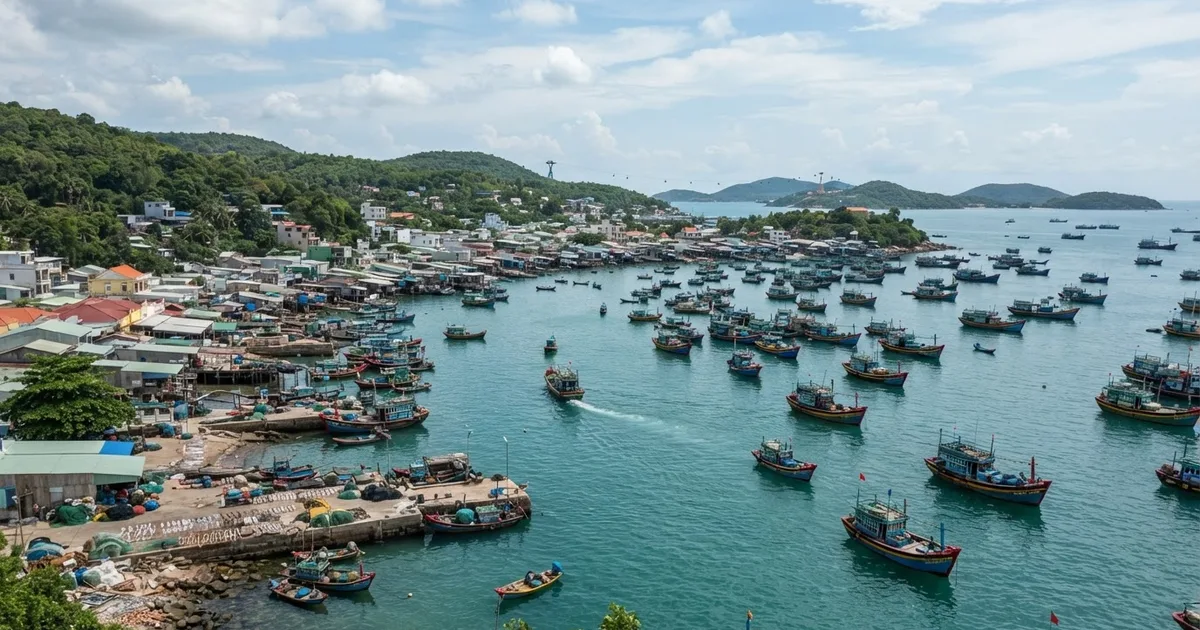
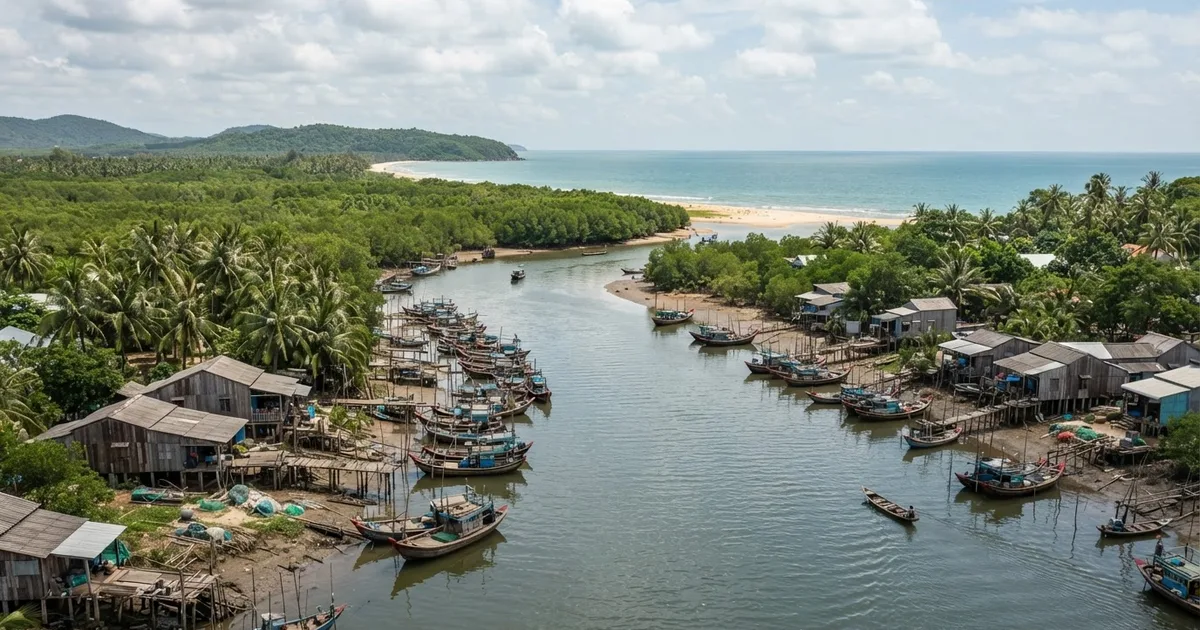
An Thoi anchors the southern tip of Phu Quoc — it is where the Hon Thom fast ferries and the cable car depart, and where most south-island boat tours begin. Cua Can is the opposite experience: a fishing-village commune on the island's northwest coast, backed by the forest of Phu Quoc National Park, about 12–13 km north of Duong Dong town. Between the two lies essentially the entire island, so this journey is a mini road trip rather than a quick hop.
There is only one practical driving route: the west coast road (DT47, which becomes Tran Hung Dao Street as it passes through Duong Dong). It runs flat, fully paved and mostly straight from An Thoi up through Bai Vong, Duong Dong, Ong Lang and Cua Duong before you turn off toward Cua Can village and its beach. The key numbers:
| Route | Distance | Time | Notes |
|---|---|---|---|
| West coast road (DT47/Tran Hung Dao) via Duong Dong and Ong Lang | ~40–42 km | 70–90 min by motorbike, 60–75 min by car | The standard route: flat, paved, sea views, fuel stations and ATMs in Duong Dong around the halfway mark |
| Same road, driven non-stop | ~40 km | ~60 min by car | Few traffic lights outside Duong Dong; watch for dogs, slow trucks and sand drifts near Cua Duong |
A few things worth knowing before you set off. There is no ferry shortcut — boats leaving An Thoi head south to the An Thoi archipelago and Hon Thom, not to the northwest coast, so wheels are the only way. Fuel stations, ATMs and pharmacies cluster in Duong Dong at roughly the 20 km mark, so top up there rather than betting on pumps further north. The final turn-off into Cua Can village narrows into a small country road; take the last 2 km slowly, especially after rain, and expect a few soft sand patches where the road meets the beach.
An Thoi to Cua Can: Every Transport Option Compared
For most travelers the choice comes down to three realistic options: ride your own motorbike, take a taxi, or hire a car with driver for the day. Ride-hailing exists on Phu Quoc but thins out quickly north of Duong Dong, and the public bus does not serve Cua Can at all. Here is how the options stack up:
| Option | Typical cost (one way) | Journey time | Best for |
|---|---|---|---|
| Rental motorbike | 150,000–250,000 VND (US$6–10) per day + ~50,000–60,000 VND fuel round trip | 70–90 min | Confident riders who want to stop freely and keep costs low |
| Metered taxi (Mai Linh / Vinasun) | ~600,000–750,000 VND (US$24–30) | 60–75 min | Couples and families who value air-con and door-to-door comfort |
| Grab / Xanh SM ride-hailing | ~500,000–700,000 VND (US$20–28) | 60–75 min | App users; driver availability in Cua Can itself is limited |
| Private car with driver (day hire) | 800,000–1,200,000 VND (US$32–48) for ~8 hours | 60–75 min direct, flexible all day | Groups of 3–4 splitting the cost, or anyone planning sunset drinks |
| Public bus + taxi combo | ~30,000–50,000 VND bus to Duong Dong + 150,000–200,000 VND taxi for the final 12–13 km | 2–2.5 hours total | Very tight budgets traveling light |
Each option also has a clear poor fit, and it is worth being honest about that before you commit. The motorbike is a poor fit for families with children under about 10, anyone who has never ridden a scooter, and visitors arriving in the October–November rains. The taxi is a poor fit for budget travelers doing a round trip, because two metered fares can top 1,300,000 VND (US$52) in a single day. The bus-plus-taxi combo is a poor fit if you are carrying beach bags, coolers or kids' gear, since you would haul it all across two different vehicles. And a full-day private driver is a poor fit for a solo traveler on a short budget — you would pay three to four times the motorbike option for seats you do not need.
On ride-hailing: both Grab and the electric taxi app Xanh SM operate across Phu Quoc and work reliably for the An Thoi–Duong Dong legs. For the final stretch to Cua Can, drivers become scarce, so agree on a pickup time and place in advance, or ask your restaurant to call a local driver. As a rule of thumb, app fares run slightly below street taxis — budget 500,000–700,000 VND one way.
Riding a Rental Motorbike from An Thoi to Cua Can
Phu Quoc is one of the easiest islands in Vietnam to ride, and the An Thoi–Cua Can run is about as gentle as a 40 km ride gets: flat roads, light traffic outside Duong Dong, and enough to see along the way that you will want to stop every 15 minutes. Renting beats hiring a driver on cost by a factor of four or more, and it lets you time the day around the 3:00 PM opening of Rock Sunset Island rather than around a driver's schedule.
- License and insurance: carry a valid license that covers motorcycles (a home-country license with an A-category endorsement plus an IDP, or a Vietnamese license). Random police checks do happen around Duong Dong, and travel insurance can void claims for unlicensed riding.
- Bike check before you leave: test both brakes, check tire tread and pressure, horn, headlight and indicators, and photograph any existing scratches so there is no dispute on return.
- Fuel: a full tank costs roughly 60,000–80,000 VND and comfortably covers the round trip (about 4–5 liters for ~80–85 km). Stations sit in An Thoi and Duong Dong; village roadside stalls sell bottled petrol for around 30,000–40,000 VND per liter if you run low.
- Timing: leave An Thoi by 8:00–9:00 AM. Sunset on the west coast falls around 6:00 PM, and stretches of the road north of Ong Lang are poorly lit — plan to ride the last hour of return in daylight.
- Season: November to March is dry and easy; October is the wettest month, when the final lanes into Cua Can can hold puddles and soft sand.
- Parking: busier beach entrances charge 5,000–10,000 VND per bike; the small fishermen's eateries in Cua Carole's stretch let diners park free.
- Navigation: download an offline map and fit a phone mount. The island's west coast is a single spine road, so getting genuinely lost is nearly impossible — the only real decision is where to stop.
The ride itself breaks down neatly: about 30–35 minutes from An Thoi to Duong Dong, a coffee or breakfast stop, then 25–30 minutes up through Ong Lang and Cua Duong, and a slow final 10 minutes into Cua Can village. With stops, count on 70–90 minutes each way.
Tip: Between December and March, Phu Quoc's high season, decent automatic scooters get booked out days in advance. Reserve your bike the day before you plan to ride — Sabrina Rental can deliver to your hotel in An Thoi with helmets and a full tank, and pick it up again at the end.
Taxis, Ride-Hailing and Private Drivers
Metered taxis from the island's established companies charge a flag fall of around 10,000–12,000 VND and then roughly 13,000–15,000 VND per kilometer, which puts the ~40 km An Thoi–Cua Can run at 600,000–750,000 VND one way. Drivers waiting at the An Thoi ferry pier and the cable car station usually quote flat rates instead of using the meter; anything at or under 700,000 VND for Cua Can is a fair deal, and it never hurts to compare two or three drivers.
A private car with driver is the middle path, and for this particular route it is often the smartest one. Day hire runs about 800,000–1,200,000 VND for roughly 8 hours, which lets you ride north with stops — the pepper farms around Cua Duong, a fish-sauce workshop in Duong Dong, a swim at Ong Lang — without watching the clock. Split four ways, it costs about the same per person as a single taxi leg.
One trick many visitors miss: instead of booking a round trip, ask your driver to wait. Most will wait 1–2 hours at Cua Can for an extra 200,000–300,000 VND, which works out cheaper than a second full fare if you only plan to spend an afternoon and an early dinner there.
And a candid warning in the other direction: if your plan includes sunset drinks — Rock Sunset Island pours until 7:00 PM — self-driving any vehicle is a poor fit. Hiring a driver for the evening costs about the same as two taxi legs and removes the alcohol question entirely.
What Awaits You in Cua Can: Beach and Food
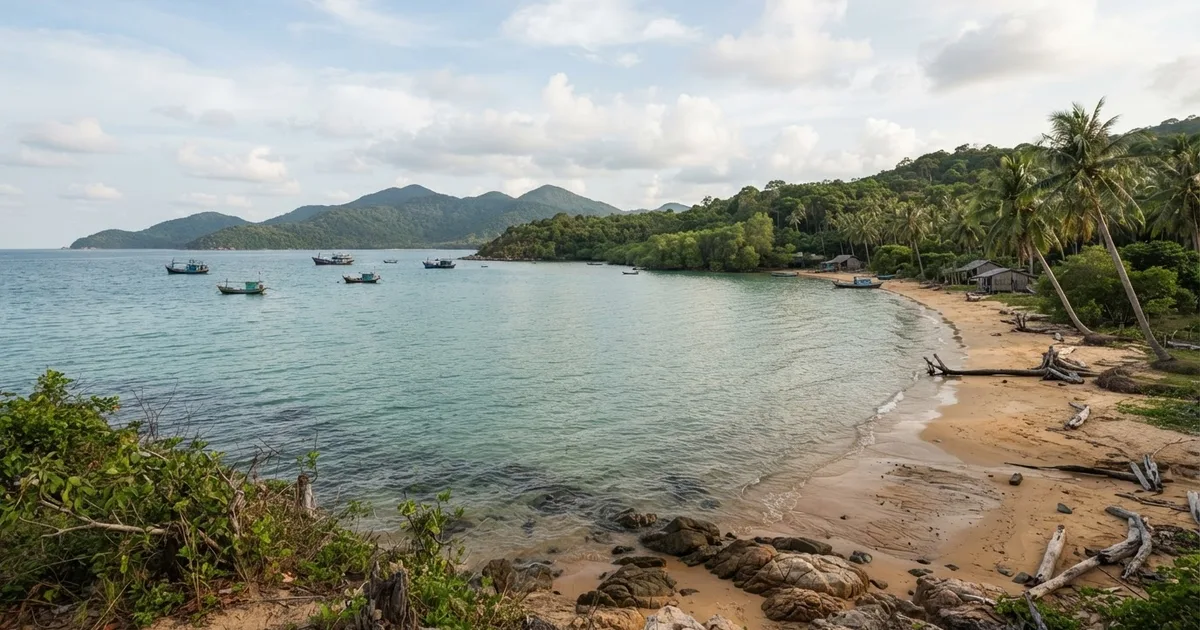
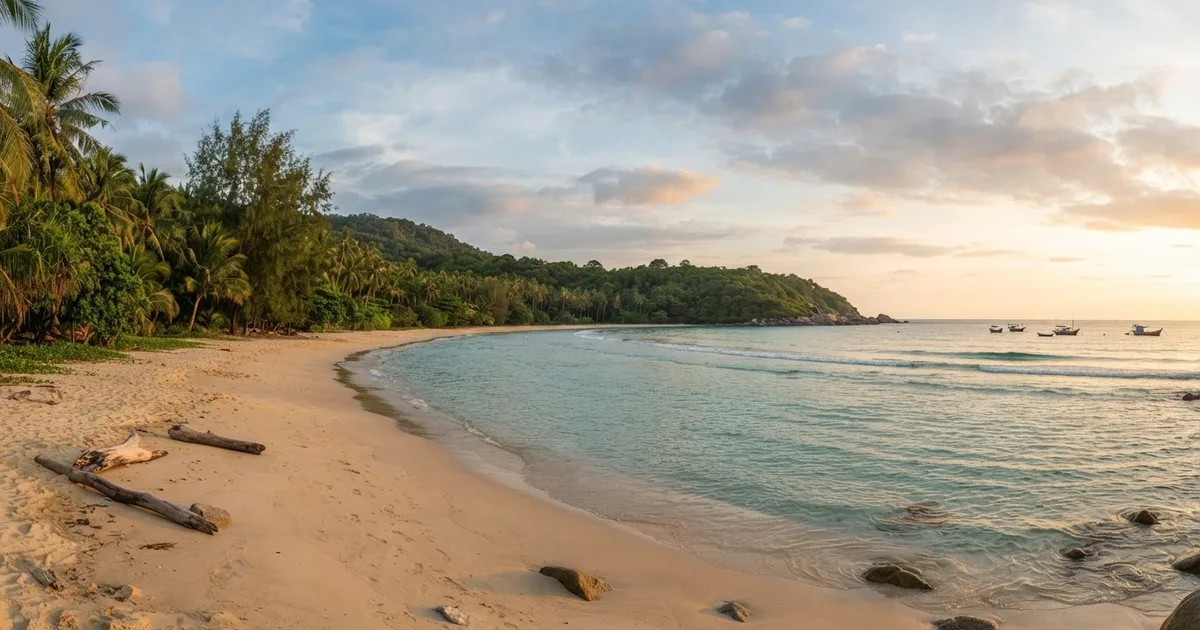
Cua Can is the anti-An Thoi. There is no cable car, no cruise terminal and no beach clubs with DJ lineups — just a long, quiet arc of pale sand lined with casuarina trees, moored fishing boats and small family-run kitchens. The food scene is deliberately small: Tripadvisor currently lists 9 restaurants for Cua Can on its Phu Quoc page, a fraction of the hundreds in Duong Dong, and most are casual eateries run by fishing families grilling the morning's catch a few meters from where it was caught.
Four names are worth planning a day around:
Chez Carole Beachfront Restaurant
The most reliable sit-down lunch in the village, right on the sand. Signature dishes are crab in coconut milk and grilled fish. Open daily 10:00 AM–10:00 PM, so it also covers an early dinner before the ride south.
Rock Sunset Island
At Hamlet 4, Cua Can Commune, and timed precisely for what the name promises: opening hours are 3:00–7:00 PM, covering golden hour over the Gulf of Thailand. Budget 40,000–200,000 VND per visit or meal.
On The Rock (Mango Bay Resort)
Technically in Ong Lang, Cua Duong — about 15 minutes south of Cua Can, so an easy add-on on the ride home. Vietnamese-Western fusion, open 6:30 AM–10:30 PM, with a typical bill of 300,000–600,000 VND (US$12–24).
MAI JO REFINED
In Group 3, Ong Lang Hamlet, Cua Duong Commune, open 10:00 AM–10:00 PM, and listed among Phu Quoc's famous restaurants for 2026. A polished stop within 15 minutes of Cua Can if you want to finish the day on a finer note.
Be equally clear about who Cua Can is not for. If you want nightlife, shopping or a choice of twenty restaurants within walking distance, this is the wrong destination — after about 9:00 PM the village effectively rolls up its streets, and the nearest late-night scene is Duong Dong, 12–13 km back down the road. Cua Can suits couples, riders, sunset chasers and anyone whose ideal beach has more fishing boats than sun loungers.
A Perfect Day-Trip Plan from An Thoi to Cua Can (and Back)
The route works beautifully as one full-day loop, because the opening hours line up almost perfectly. Here is a timetable that locals would recognize:
8:00 AM — Leave An Thoi with a full tank. 8:45 AM — Stop at the Duong Dong morning market, where pho stalls serve from 6:00 to 10:00 AM; most orders cost well under 30,000 VND. 9:30 AM — Continue north along the coast. 10:15 AM — Arrive at Cua Can beach while it is still nearly empty; swim, walk, photograph the boats. 12:30 PM — Lunch at Chez Carole: crab in coconut milk and grilled fish, with the restaurant open until 10:00 PM if you run late. 3:00 PM — Rock Sunset Island opens; settle in for the 40,000–200,000 VND sunset session until 7:00 PM.
5:30–6:00 PM — Ride south as the light fades. 7:00 PM — Arrive in Duong Dong just as the Dinh Cau Night Market, the island's most popular food destination, hits full swing; it opens daily from about 5:00 PM to 10:30 PM, and seafood plates start from 30,000 VND. The locals' night market along Tran Hung Dao Street is the better bet for grilled seafood at local prices. 9:00 PM — Finish with street-food carts along 30/4 Street, where cheap seafood bánh mì and most other orders stay under 30,000 VND — or duck into one of the quan com (rice-plate eateries) on the side streets off Tran Hung Dao where Duong Dong locals actually eat. 9:45 PM — Back in An Thoi, 40 km and a full island later.
If you would rather skip the night market, reverse the logic: eat lunch at a quan com in Duong Dong on the way up, make Cua Can your late afternoon, and have On The Rock at Mango Bay (open until 10:30 PM) as your final dinner stop before the last hour's ride home.
What the Round Trip Costs: Three Budget Scenarios
Transport is only half the math, so here is what a realistic day from An Thoi to Cua Can and back costs per person under three different travel styles:
| Scenario | Transport | Food & extras | Approx. total per person |
|---|---|---|---|
| Solo rider on a rental motorbike | 200,000 VND bike for the day + ~60,000 VND fuel | 150,000–300,000 VND (market breakfast, Chez Carole lunch, Rock Sunset drink) | ~410,000–560,000 VND (US$16–22) |
| Couple doing taxis both ways | 1,200,000–1,500,000 VND round trip, split two ways | 200,000–350,000 VND each | ~800,000–1,100,000 VND (US$32–44) |
| Group of 4 with a private driver for the day | 1,000,000 VND day hire split four ways = 250,000 VND each | 200,000–400,000 VND each | ~450,000–650,000 VND (US$18–26) |
The pattern is clear: the more people you can put behind one driver — or one handlebar — the cheaper the day gets. A solo traveler on a scooter does the entire island-crossing day for roughly the price of a single taxi fare's deposit, while a couple that values air-con will happily pay double for the comfort.
Frequently Asked Questions
How far is Cua Can from An Thoi?
About 40–42 km one way via the west coast road (DT47/Tran Hung Dao) through Duong Dong and Ong Lang. By car or taxi the trip takes 60–75 minutes; by motorbike, count on 70–90 minutes with stops. It is essentially a full crossing of the island from south to northwest.
Is there a bus from An Thoi to Cua Can?
No bus reaches Cua Can directly. The public bus runs between An Thoi and Duong Dong for roughly 30,000–50,000 VND, but from Duong Dong you still need a taxi or ride for the final 12–13 km north, which costs about 150,000–200,000 VND. Total journey time is 2–2.5 hours.
How much does a taxi from An Thoi to Cua Can cost?
A metered taxi runs about 600,000–750,000 VND (US$24–30) one way for the ~40 km trip. A round trip by taxi typically totals 1,200,000–1,500,000 VND. Alternatively, many drivers will wait 1–2 hours at Cua Can for an extra 200,000–300,000 VND, which is often cheaper than a second full fare.
Can I ride a motorbike from An Thoi to Cua Can without experience?
The roads are flat and paved, but this is a poor fit for complete beginners — it is a 40 km ride each way with real traffic through Duong Dong. Rentals cost 150,000–250,000 VND per day, and you should carry a license covering motorcycles; police checks happen around Duong Dong and insurance may not pay out for unlicensed riders.
What time should I leave An Thoi for Cua Can?
Leave between 8:00 and 9:00 AM. That gets you to Cua Can by mid-morning, allows a Chez Carole lunch (open 10:00 AM–10:00 PM), and positions you for Rock Sunset Island's 3:00–7:00 PM session. Aim to start riding back by 6:00 PM, since stretches north of Ong Lang have poor lighting after dark.
Where should I eat in Cua Can?
Tripadvisor lists 9 restaurants in Cua Can, mostly casual fishermen's eateries serving fresh seafood. Chez Carole Beachfront Restaurant is the standout for crab in coconut milk and grilled fish, open 10:00 AM–10:00 PM. For more choice, On The Rock at Mango Bay Resort (Vietnamese-Western fusion, bills of 300,000–600,000 VND or US$12–24) sits 15 minutes south in Ong Lang.
Does Grab work on the An Thoi–Cua Can route?
Grab and Xanh SM work reliably in An Thoi and Duong Dong, with app fares of roughly 500,000–700,000 VND for the full route. However, drivers become scarce around Cua Can itself, so arrange your return pickup in advance — agree a fixed time and place, or ask your restaurant to call a local driver.
Is the trip from An Thoi to Cua Can worth it?
Yes, if you want quiet beaches, a fishing-village feel and a west-coast sunset — a solo rider can do the whole day for around 410,000–560,000 VND (US$16–22). It is a poor fit if you need nightlife or extensive dining: after 9:00 PM Cua Can goes quiet, and the nearest late-night food scene is Duong Dong, 12–13 km away.
Planning the ride from An Thoi up to Cua Can? Sabrina Rental can set you up with a serviced motorbike, helmets and local route advice — or arrange a trusted private driver for the day. Message us and we will have everything ready at your hotel.
Contact Sabrina Rental