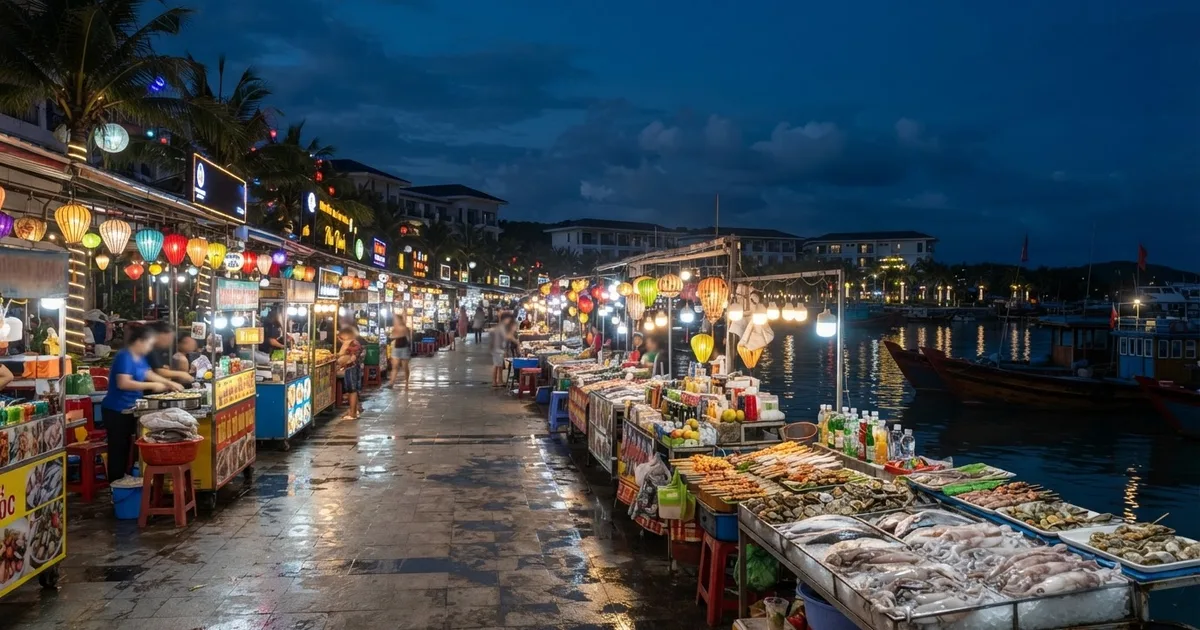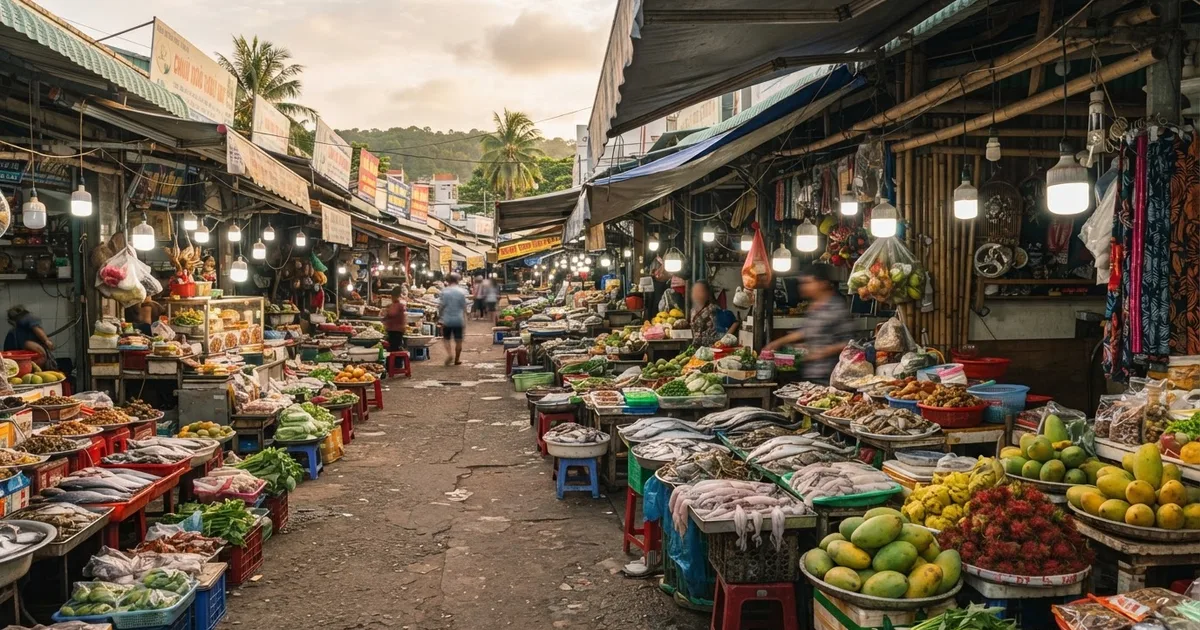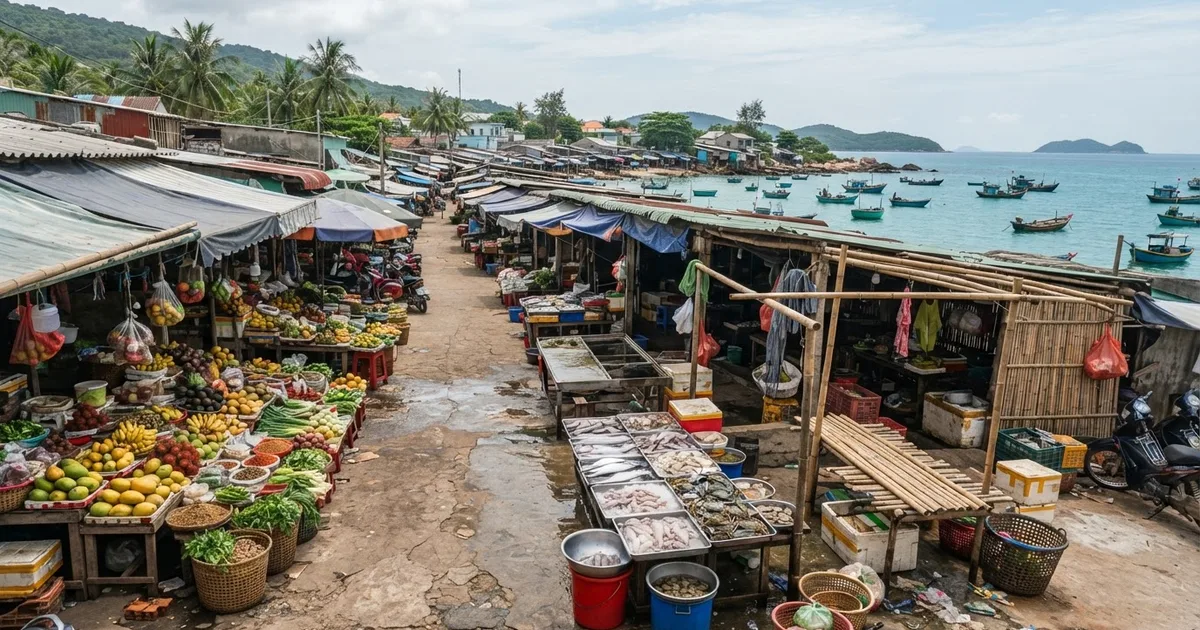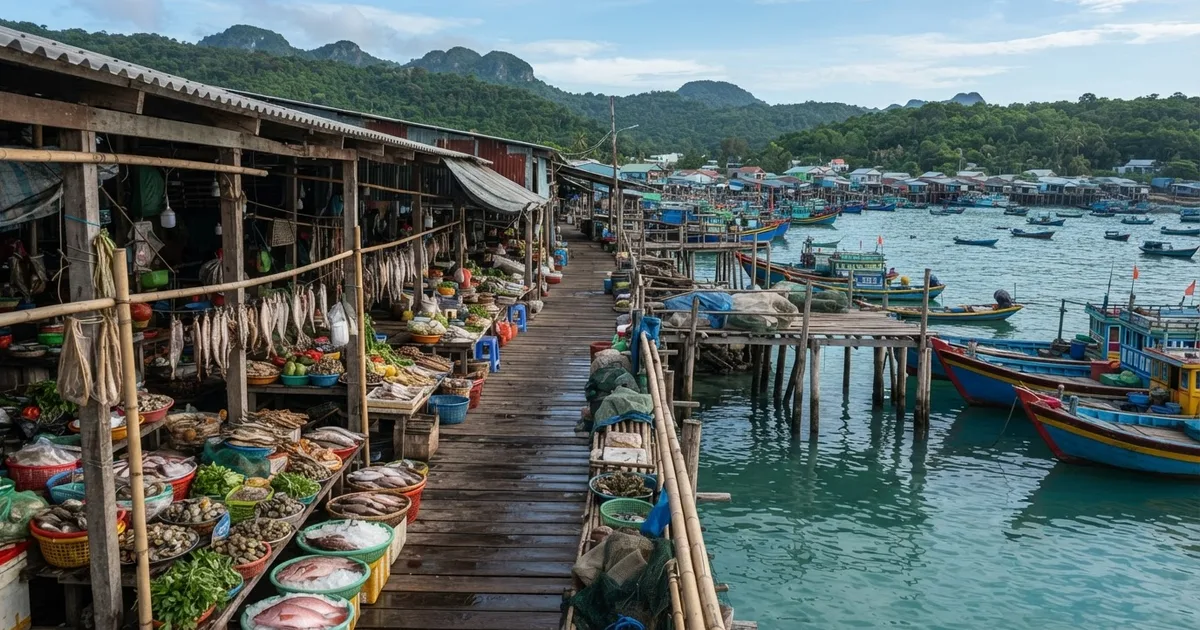
Ham Ninh Market is a small traditional market on TL47 in Rach Ham, Phu Quoc, best known for fresh crab, mackerel and other locally landed seafood. It is listed as open 24 hours every day, although several travel guides give shorter daytime hours of 6:00 AM to 3:00 PM or 6:00 AM to 8:00 PM. For the freshest choice and liveliest atmosphere, arrive between 6:00 and 9:00 AM; a crab price of about 200,000 VND per kilogram is a useful reference, although daily prices vary.
Where is Ham Ninh Market and what is it like?
Ham Ninh Market is located on TL47 in Rach Ham, close to the well-known Ham Ninh Fishing Village on Phu Quoc's eastern coast. The market serves local residents and fishing households, so its character is practical rather than polished. Stalls typically display seafood, specialty products, dried goods and everyday items used by people living nearby.
Expect a compact traditional Vietnamese market rather than a spacious modern food hall. The layout may include seafood vendors, produce sellers, small food stalls and shops selling household necessities. Depending on the time of day, you may see fishermen's catch being sorted, seafood packed for local buyers and cooked food prepared for breakfast.
The market and the nearby fishing village are often discussed together, but they are not exactly the same experience. Ham Ninh Market is the place to browse everyday goods and buy seafood, while the village area provides a closer look at the coastal community and restaurants serving seafood. Allow extra time if you want to combine both stops rather than treating the market as a quick shopping visit.
Ham Ninh is a good fit for travelers who want to see an ordinary local market, choose seafood close to its landing area or photograph traditional commerce. It is a poor fit for visitors seeking air-conditioned shopping, a large range of branded souvenirs or a guaranteed English-speaking retail experience. The market is small-scale, informal and most useful when you are comfortable observing, asking simple questions and accepting that stock changes during the day.
When should you visit Ham Ninh Market?
The most reliable time to visit is between 6:00 and 9:00 AM. A morning visit gives you the best chance of finding newly arrived crab, mackerel, clams, squid and other seafood before popular items sell out. It is also the period when the market feels most active, with local buyers purchasing ingredients for the day.
Early morning is especially useful if you want to compare several seafood stalls. Look for live movement in crabs, clear eyes on fish and a clean, fresh smell around the seafood displays. These signs are not a guarantee of quality, but they are practical observations when selecting your purchase. Vendors can usually tell you whether an item is intended for steaming, grilling or cooking in soup.
Published opening information is inconsistent. Ham Ninh Market is listed as open 24 hours every day, while other guides state 6:00 AM to 3:00 PM or 6:00 AM to 8:00 PM. These differences may reflect individual vendor schedules, the nearby village area or informal activity continuing after the main market has quietened. In practice, do not plan a late-night visit expecting every stall to be operating. Morning is the safest option for selection, food and atmosphere.
| Time | What you are likely to find | Best for |
|---|---|---|
| Before 6:00 AM | Early preparation and some seafood activity | Travelers staying nearby who want the earliest catch |
| 6:00–9:00 AM | Fresh seafood, produce, breakfast and the busiest trading period | Most visitors; this is the recommended window |
| 9:00 AM–3:00 PM | A quieter selection, cooked food and daily goods | A slower browse or a combined village visit |
| 3:00–8:00 PM | Some vendors may remain, but seafood choice can be narrower | Flexible daytime travelers who have checked locally |
| After 8:00 PM | Hours are uncertain despite 24-hour listings | Not recommended if you need a full market experience |
What seafood can you buy?
Seafood is the main reason to visit. Ham Ninh is particularly famous for crab and mackerel, and visitors may also find live crabs, clams, squid, fish and other shellfish. Stock depends on the day's catch, weather and local demand, so one morning may offer a different selection from the next.
Crab is the clearest price reference available: approximately 200,000 VND per kilogram. Treat this as a guide rather than a fixed tariff. Size, species, freshness, season and whether the crab is live can all affect the final amount. Before the vendor weighs it, confirm the price per kilogram and ask whether cooking, cleaning or packing is included.
Fresh mackerel is another notable purchase, particularly if you have access to a kitchen or plan to take it to a nearby restaurant. Clams and squid are practical choices for grilling, steaming or adding to soup. If you are not cooking yourself, ask a vendor or restaurant whether they can prepare the seafood and confirm the cooking fee before ordering.
Buying tip: Decide first whether you want seafood to eat immediately or to transport elsewhere. Live crab and shellfish are poor choices for a long unrefrigerated journey. For a short trip, ask for ice and secure packaging, then return to your accommodation promptly.
Freshness matters more than buying the largest quantity. Check that shellfish are closed or responsive, crabs are active and fish have clear eyes and firm flesh. Avoid purchasing more than you can safely store or eat. A market visit is more enjoyable when you select one or two local items rather than trying to carry a full seafood haul around the island.
What else is sold at the market?
Although seafood attracts visitors, Ham Ninh Market is also a place for specialty products, fresh produce, dried goods and daily life items. You may see vegetables, herbs, fruit, cooking ingredients, household supplies and simple prepared food. These stalls help explain why the market remains useful to local residents rather than functioning only as a tourist attraction.
Dried seafood is easier to transport than live or fresh products. Depending on the stall, look for dried fish, dried squid, dried shrimp and other preserved seafood. Dried items vary considerably in size, moisture and packaging, so compare several stalls and ask how the product should be stored. Vacuum packing is useful if you are flying or making a long journey.
Other Phu Quoc specialties commonly associated with local markets include pepper and fish sauce. These are practical gifts, but check the label, container size and transport rules before buying. Fish sauce should be packed carefully because leakage can damage luggage. Pepper is lighter, easier to carry and available in formats suitable for home cooking.
Souvenirs may be available around the Ham Ninh Fishing Village area, but Ham Ninh Market is not primarily a souvenir market. Visitors seeking a broad selection of decorative gifts, clothing or branded products may find the choice limited. The strongest reasons to come are fresh food, local atmosphere and everyday shopping.
How to eat seafood at Ham Ninh?
There are two practical ways to enjoy seafood purchased near the market. You can buy it for cooking at your accommodation, if your room has suitable facilities, or ask a nearby seafood restaurant whether it will prepare your purchase. Cooking arrangements vary, so agree on the preparation method and total price before the food is taken into the kitchen.
Steaming is a straightforward choice for crab and shellfish because it lets you judge the natural flavor. Grilling works well for squid and some fish, while clams can be cooked with herbs or added to soup. Ask for the simplest preparation if you want to taste the seafood itself rather than a heavy sauce.
Hygiene and timing are important in a tropical climate. Eat cooked seafood promptly, keep raw items separated from ready-to-eat food and avoid carrying fresh seafood in the sun. If a stall does not look clean or the seafood has a strong unpleasant smell, choose another vendor. The market's early hours make it easier to buy, cook and eat seafood while it is still fresh.
Ham Ninh is a poor fit for travelers who need a predictable menu, fixed prices and a fast meal in a controlled setting. It suits visitors who enjoy choosing ingredients and accepting some uncertainty. If you prefer a restaurant with a printed menu, visit a seafood restaurant near the village after browsing the market instead of purchasing raw ingredients.
Ham Ninh Market compared with An Thoi Market
An Thoi Market is another useful food-shopping stop on Phu Quoc, but the two markets suit different plans. Ham Ninh is associated with the eastern fishing village, fresh local catch and a smaller traditional-market atmosphere. An Thoi is a practical southern market for fresh seafood, dried seafood, vegetables, essential goods and traditional breakfast dishes.
| Feature | Ham Ninh Market | An Thoi Market |
|---|---|---|
| Location | TL47, Rach Ham, eastern Phu Quoc | An Thoi, southern Phu Quoc |
| Main strength | Fresh crab, mackerel and fishing-village atmosphere | Fresh and dried seafood plus practical daily shopping |
| Food experience | Seafood near Ham Ninh Fishing Village | Traditional breakfast dishes and local food stalls |
| Notable foods | Crab, clams, squid and mackerel | Bun Quay, Bun Ca, Banh Canh Cha Ca, dried squid and dried shrimp |
| Good purchases | Fresh seafood, dried goods and local specialties | Dried seafood, local pepper and fish sauce |
| Souvenir shopping | Limited; not the main purpose | Pearl jewelry may be available nearby, but food shopping is the main strength |
Choose Ham Ninh if your itinerary already includes the eastern coast or you want the atmosphere of a small fishing-community market. Choose An Thoi if you are in the south, want a traditional breakfast or need a broader practical stop for fresh produce, dried seafood and essential goods. Neither market is an ideal substitute for a dedicated souvenir center.
Practical tips for visiting
- Go early: Plan to arrive between 6:00 and 9:00 AM, especially if fresh crab or mackerel is your priority.
- Carry cash: Small local stalls may not accept cards, and exact change makes modest purchases easier.
- Confirm the unit: Ask whether the quoted seafood price is per kilogram, per item or for the whole tray.
- Compare before buying: Walk past several stalls before choosing, particularly for crab, squid and dried seafood.
- Bring a reusable bag: It is useful for dry goods, but fresh seafood should also be sealed and kept cool.
- Dress for a wet floor: Sandals or washable shoes are more practical than delicate footwear.
- Ask before photographing: Vendors and shoppers may not want close-up photographs while working.
- Keep valuables secure: Traditional markets can be crowded around seafood displays and narrow aisles.
Traffic and weather can affect the experience. The eastern coast may feel hot later in the morning, while rain can make the market floor slippery. Leave enough time to park safely and avoid blocking stalls or access roads. If you are riding a motorbike, secure your helmet and belongings before entering the market.
For directions, use the location description TL47, Rach Ham and confirm the current map pin with your accommodation or a local contact. Market names can be translated or written differently on maps, and the wider fishing-village area may appear separately from the market listing.
Is Ham Ninh Market worth visiting?
Ham Ninh Market is worth visiting if you want fresh seafood, a local shopping experience and an easy reason to explore Phu Quoc's eastern coast. Its strongest feature is authenticity: it is a small market serving daily needs, not a staged attraction designed entirely for visitors. The reported crab price of about 200,000 VND per kilogram also gives seafood shoppers a useful starting point for budgeting.
It is less suitable for travelers with only a few hours on the island, visitors who dislike wet markets or anyone expecting a large, air-conditioned shopping venue. If you do not plan to eat or buy food, the market itself may take less than an hour to explore. Pairing it with Ham Ninh Fishing Village and a nearby coastal meal creates a more complete half-day outing.
The best plan is simple: arrive in the early morning, walk through the seafood stalls, compare prices, buy only what you can safely use and then continue to the fishing village or another eastern-coast attraction. Keep expectations realistic about opening hours and vendor selection, and Ham Ninh Market can provide a more informative local experience than a purely souvenir-focused stop.
Frequently Asked Questions
Where is Ham Ninh Market?
Ham Ninh Market is on TL47 in Rach Ham, on the eastern side of Phu Quoc. It is near Ham Ninh Fishing Village, so you can combine a market visit with a walk through the coastal community and a seafood meal. Check the current map pin locally because market and village listings may appear separately.
What time should I visit Ham Ninh Market?
The best time is between 6:00 and 9:00 AM, when seafood and produce are freshest and local trading is busiest. Published hours vary: some listings say 24 hours, while guides give 6:00 AM to 3:00 PM or 6:00 AM to 8:00 PM. Morning is the most dependable choice.
How much does crab cost at Ham Ninh Market?
Crab is reported at about 200,000 VND per kilogram. This is a reference price, not a guarantee. The amount can change with size, species, freshness, season and supply. Confirm the price per kilogram before weighing, and ask whether cleaning, cooking or packing costs extra.
What seafood is available at Ham Ninh Market?
The market is known for fresh live crab and mackerel, and may also sell clams, squid, fish and other shellfish. Selection changes according to the day's catch and weather. Arriving between 6:00 and 9:00 AM gives you the best chance of finding a broad choice before popular seafood is sold.
Can visitors eat seafood bought at the market?
Visitors can buy seafood for cooking or ask a nearby restaurant whether it will prepare the purchase. Confirm the cooking method and fee before handing over the food. Keep raw seafood chilled, avoid carrying it in the sun and eat cooked items promptly in Phu Quoc's tropical climate.
Is Ham Ninh Market a good place to buy souvenirs?
It is better for food and daily shopping than for souvenirs. You may find dried seafood, specialty products, local pepper and fish sauce, while the nearby village area may have additional small gift stalls. Travelers wanting a broad selection of decorative souvenirs or branded products should choose a dedicated shopping area instead.
What is the difference between Ham Ninh Market and An Thoi Market?
Ham Ninh is a smaller eastern-coast market associated with fresh crab, mackerel and the fishing village. An Thoi is a practical southern market with fresh and dried seafood, produce, essential goods and traditional breakfast dishes such as Bun Quay, Bun Ca and Banh Canh Cha Ca. Choose according to your route and shopping plans.
Is Ham Ninh Market suitable for families?
Families can visit, especially in the morning, but the market has wet floors, narrow spaces, live seafood and busy vendor activity. Wear secure shoes, supervise children near tanks and buckets, and avoid the hottest part of the day. It is a better fit for families interested in local food than for a relaxed indoor shopping trip.
Need current directions, a motorbike, seafood advice or help planning a market visit on Phu Quoc? Contact Sabrina Rental for local assistance and practical island arrangements.
Contact Sabrina Rental