Cửa Cạn is a mellow village beach about 6 km north of Dương Đông on Phu Quoc's north-west coast, with roughly 3 km of west-facing sand and no real commercial scene. There are a handful of hotels, a few riverside and seaside seafood restaurants, some street food, and narrow lanes leading down to the water — and that is essentially it. It is a strong choice for quiet stays, sunsets and kayaking, and a poor choice for anyone who wants beach clubs, shopping or a walkable restaurant strip.
Where Is Cửa Cạn, and What Is It Really Like?
Cửa Cạn sits on the north-west coast of Phu Quoc, about 6 km north of Dương Đông, the island's main town and the place where most banks, ATMs, shops and the night market are. The coast road runs north out of town past Long Beach and into the village, with the sand curving away towards Ông Lang further up the coast. Because the beach faces west, Cửa Cạn gets the full sunset — one of the main reasons people bother riding the extra ten minutes out of Dương Đông.
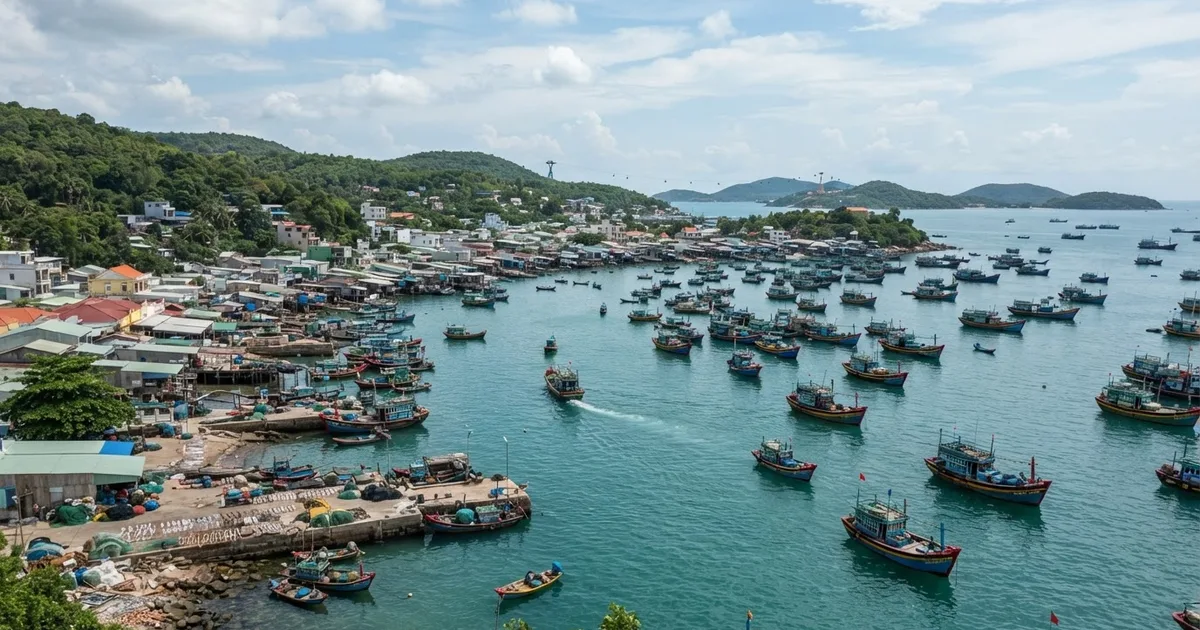
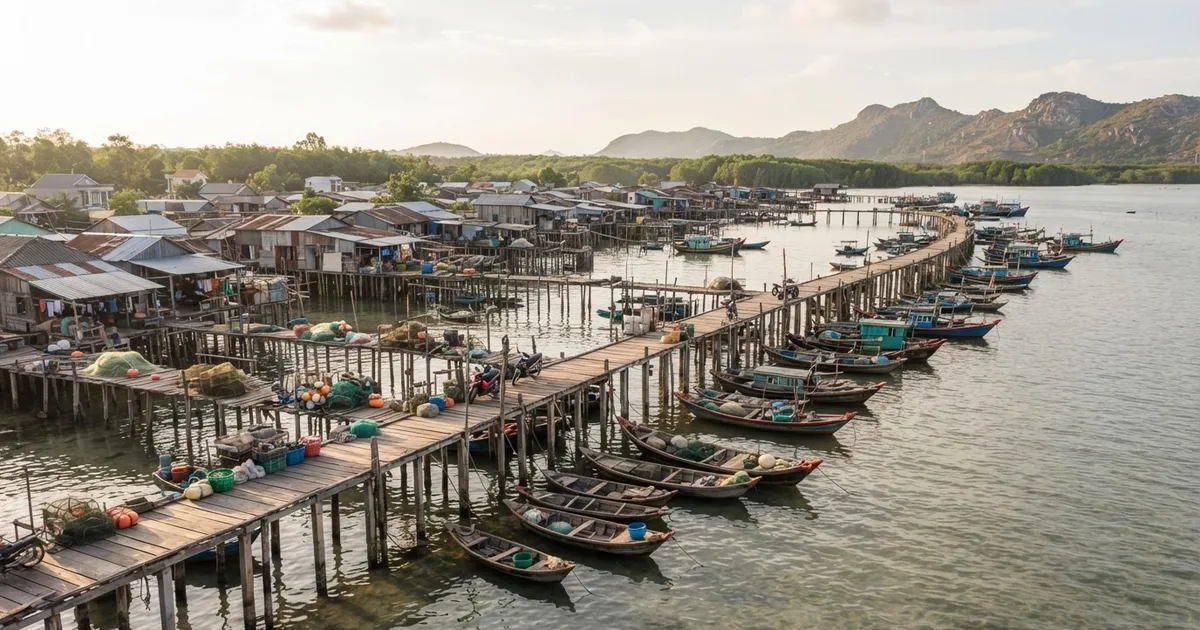
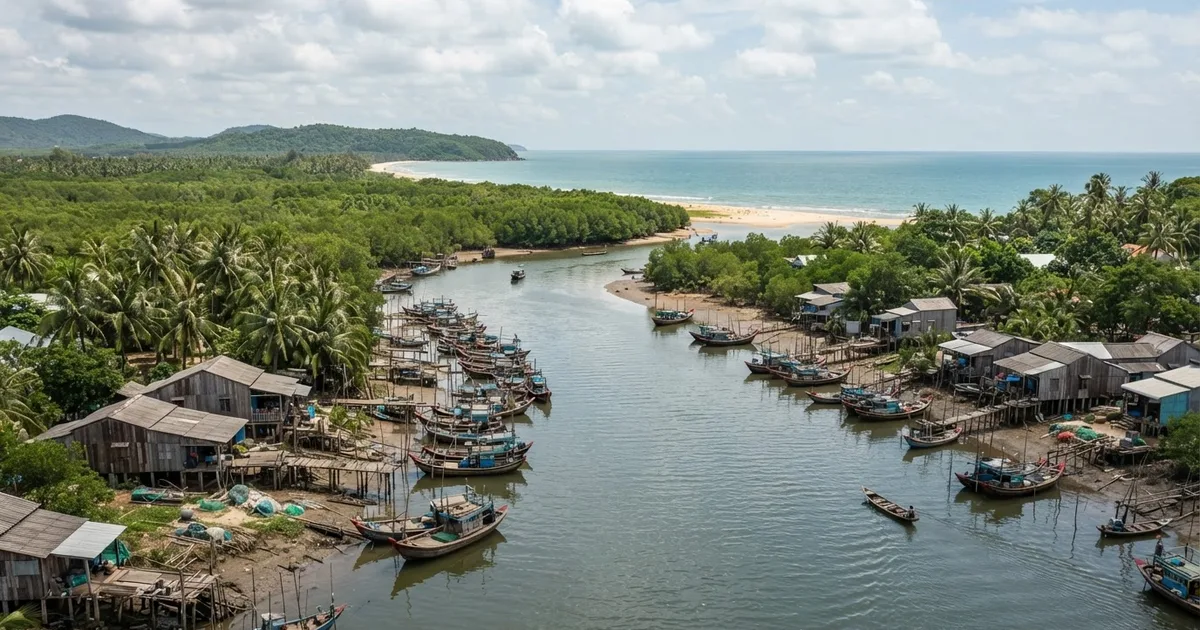
The name refers to the river mouth at the heart of the village, where a small estuary meets the sea and wooden fishing boats tie up. Around it is a small settlement that is a bit run-down in places but genuinely friendly: family houses, a few shops, street food stalls, and several tiny alleyways that lead straight onto the beach. It has never been designed around tourists, which is exactly why it stays quiet.
Development here is light compared with the rest of the island. There is no beachfront promenade, no row of bars, and very little commercial infrastructure — no supermarket strip, no shopping, few services. What you get instead is empty sand for most of the day, warm water in the dry season, and a village that still works as a village: boats going out at dusk, nets drying, kids on bicycles.
Cửa Cạn is therefore best understood as a quiet base rather than a place with a to-do list. Travellers who want nature, relaxation and a slow stay tend to love it. Travellers who want to be in the middle of things usually move on after one night.
| Cửa Cạn at a glance | Detail |
|---|---|
| Distance from Dương Đông | About 6 km north (10-15 minutes by scooter, 15-20 by car) |
| Beach length | Roughly 3 km |
| Coast orientation | North-west / west-facing, sunset side |
| Best months | October to May |
| Character | Small settlement, friendly, partly run-down, still little developed |
| Food | Street food plus a few riverside and seaside local and seafood restaurants |
| Accommodation | Limited but real supply, mostly resort-style and eco lodges |
| Best for | Relaxing, kayaking, boat trips, fishing, sunsets |
What Is There to Do in Cửa Cạn?
Nobody comes here for attractions. You come for the water, the light and the pace — which means the activities are simple, cheap and mostly self-organised.
Swimming and beach days. Three kilometres of sand is a lot of space for a village this size, so even in high season you can walk a few hundred metres and have the beach largely to yourself. Mornings and the two hours before sunset are the most comfortable windows; midday sun on the west coast is fierce between November and April.
Kayaking. The river mouth at the centre of the village is the natural launch point. You can paddle up the sheltered estuary, or head out along the coast where the water is usually calmer early in the day. Kayaks are easiest to arrange through your hotel rather than turning up on the sand and hoping.
Boat trips and fishing. This is still a working fishing area, so boats and local knowledge are right there. Sunset and night squid-fishing trips are the classic outing, and half-day boat trips around the island typically run from roughly $20-40 per person depending on the boat, group size and inclusions. Ask at your guesthouse or at the harbour — arranging on the spot is normal here.
Sunset. The west-facing beach gives you a clean horizon line, and the river mouth gives you foreground. Bring something cold and sit on the sand; there is no bar strip to compete with the view.
Eating. Options are limited but honest: street food, plus a few riverside and seaside restaurants serving local dishes and fresh seafood. Expect grilled fish and squid, hotpots and noodle soups rather than international menus. Street noodles typically cost about $1.50-3 a bowl and a plate of grilled seafood around $4-10, which is well below what you would pay in a Dương Đông night-market restaurant.
Bring cash. Cửa Cạn has no bank branch and effectively no reliable ATM — the nearest are 6 km south in Dương Đông. Most small eateries and street stalls are cash only, so draw money before you ride north and keep a buffer for boat trips and kayak hire.
Where to Stay in Cửa Cạn
Accommodation around Cửa Cạn is a limited but real supply, and it is used mainly for resort-style stays. That means you will not find a hostel strip or dozens of guesthouses competing on price — you will find a short list of properties, a few of which are a 10 to 15 minute walk from the sand.
| Property | Style | What to expect |
|---|---|---|
| Mövenpick Waverly | International resort | Full service — pool, restaurants, spa, air-conditioned rooms; the most polished option associated with the area |
| Green Bay | Beach-oriented hotel | North-west coast setting, beach access, quieter scale than a large resort |
| Chez Carole | Smaller beach-style stay | Low-rise, informal, suited to couples and independent travellers |
| Phu Quoc Eco Lodge | Eco lodge | Garden and nature setting, bungalow-style rooms, fewer facilities |
| Eco Lagoon | Eco lodge | Nature-focused stay, good for travellers who want quiet over service |
| Rain Forest Resort | Eco / resort hybrid | Green surroundings, simple comforts, popular with slow travellers |
Broadly across Phu Quoc, expect roughly $25-45 a night for a simple bungalow, $60-120 for a comfortable mid-range room and $150 and up for an international-brand resort in high season. Cửa Cạn's international-brand rooms sit at the top of that range; its eco lodges sit in the middle and lower bands. Rates swing hard between low and high season, so the same room can cost twice as much in January as in September.
Because supply is thin, book ahead for mid-December to February and around Vietnamese public holidays such as Tet and the 30 April-1 May weekend. Check the map before you book: several properties are a genuine 10 to 15 minutes' walk from the beach, which is fine on a dry evening and less fun in the rain.
Who Cửa Cạn Suits — and Who Should Skip It
Cửa Cạn is a good fit for a specific kind of traveller, and a genuinely bad fit for another. Being honest about that saves people a wasted booking.
Great fit: slow travellers and couples
If your ideal day is a long breakfast, an empty beach, a kayak, a sunset and a plate of grilled squid, Cửa Cạn does exactly that with almost no competition for space. It is quiet, unspoiled and cheap to eat in.
Great fit: nature and water people
Kayaking, boat trips and fishing are the core activities, and the village's working harbour makes arranging them easy. Photographers get west-facing sunsets and a lived-in fishing village rather than a staged resort backdrop.
Poor fit: nightlife and party travellers
There is no bar strip, no beach club and nothing open late. If you want to walk between venues at midnight, base yourself in Dương Đông or on Long Beach and visit Cửa Cạn as a day trip instead.
Poor fit: families wanting attractions
No water park, no kids' clubs, no entertainment complex, no walkable row of shops and restaurants, and very few services in the village. Families who need a resort pool and easy logistics will find the area thin.
Poor fit: travellers without transport
Nothing essential is within walking distance except the beach. The nearest town, ATMs, pharmacy and night market are 6 km away, and taxis do not cruise the lanes. Without a scooter or a driver, a stay here gets frustrating fast.
Poor fit: short-stay checklist tourists
If you have two nights and want the cable car, snorkelling, the night market and a famous beach, the north-west coast is the wrong end of the island. Stay south and treat Cửa Cạn as a slower add-on.
What Cửa Cạn Does Not Have
Part of the appeal is what is missing, but it is worth knowing the trade-offs before you book three nights here.
- No supermarkets or convenience chains. Small local shops sell drinks and snacks; for anything more, ride to Dương Đông.
- No ATMs or banks. Bring cash from town — 6 km is a long way when you have no money for dinner.
- No restaurant choice. A handful of local and seafood places plus street food. Two or three nights of eating out, and you will be repeating yourself.
- No nightlife. Evenings are dark, quiet and early unless your hotel has a bar.
- Patchy infrastructure. The village is described as a bit run-down; some lanes are narrow, uneven and lightly lit at night.
- Weather exposure. The beach faces the open west, so monsoon swell hits it directly — a real difference from sheltered east-coast spots.
Before you book Cửa Cạn
- Reserve a scooter (or confirm a driver) for the whole stay — island rates typically fall around $6-15 a day depending on the bike and how long you rent.
- Withdraw cash in Dương Đông: enough for meals, boat trips and fuel.
- Confirm the walking distance from your hotel to the beach — some are 10 to 15 minutes away.
- Check tide times for the days you plan to kayak or swim.
- Pack insect repellent, a torch or phone light for the lanes, and reef-safe sunscreen.
- Book rooms early for December to March and public holidays.
Getting to Cửa Cạn and Getting Around
From Dương Đông, Cửa Cạn is a straight 6 km ride north along the coast road — roughly 10 to 15 minutes on a scooter and 15 to 20 minutes by car or taxi. Ride-hailing apps do operate on Phu Quoc and are the simplest option if you are arriving without your own transport, though availability thins out the further north you go, especially after dark.
From Phu Quoc International Airport, allow roughly 14-16 km and 25 to 35 minutes by car, since the airport sits south of Dương Đông and you are heading past the town to the far side. Nothing like a public bus serves the village lanes, so plan on a taxi, a pre-arranged transfer, or picking up a scooter in Dương Đông and riding north yourself.
Once you are in Cửa Cạn, a scooter is what makes the area work. It gets you to Dương Đông for the night market, banks, pharmacies and restaurants, to the beaches further north towards Ông Lang, and back to your hotel after sunset. Fill the tank in town before heading north — fuel stops get sparse on the quieter stretch of coast road. Helmets are compulsory in Vietnam and, in practice, worth wearing regardless.
Walking is fine within the village: the beach, the river mouth, the street food and the alleyways are all close together. Just do not plan on walking to town.
The Best Time to Visit Cửa Cạn
The recommended window is October to May, and the pattern breaks down fairly predictably across Phu Quoc's year.
November to March is the sweet spot: dry, breezy days around 28-31°C, calmer sea and clean sunsets. It is also the busiest period, so book accommodation well ahead if you are set on Cửa Cạn specifically.
April and May turn hotter, around 30-34°C with higher humidity, but the sea often goes flat and glassy — the best months for kayaking and long swims, at the cost of some very strong midday sun.
June to September brings the south-west monsoon: heavier rain, stronger surf, more red-flag swimming days and a handful of beach businesses closing. Because Cửa Cạn faces west and open to the gulf, it takes this weather more directly than sheltered spots on the island's east side. Rain usually arrives in intense bursts rather than all-day drizzle, so days are not write-offs — but this is not the season to plan a beach-focused trip here.
How Cửa Cạn Compares to the Rest of Phu Quoc
Phu Quoc's areas feel very different from one another, and where you base yourself changes the whole trip.
| Area | Character | Best for |
|---|---|---|
| Cửa Cạn (north-west) | Small, friendly, partly run-down village beach with a 3 km west-facing shore and very few services | Quiet stays, sunsets, kayaking, boat trips, fishing |
| Ông Lang (further north-west) | A step livelier than Cửa Cạn, with a more developed beach scene | Travellers who want quiet but with more eating and drinking options |
| Dương Đông and Long Beach | The island's main town: night market, banks, ATMs, restaurants, transport links | Convenience, food variety, a base for exploring the whole island |
| An Thới and the south | A lively, busy fishing port at the southern tip and one of the island district's main tourist areas | Boat trips to the An Thới Islands, the Hòn Thơm cable car, snorkelling and diving over coral reefs |
| Sao Beach and the south-east | The famous white-sand day-trip beach, busier and more organised | Classic beach photos and a half-day outing |
The most useful comparison for most travellers is Cửa Cạn versus An Thới, because they sit at opposite ends of the island and do opposite things. Cửa Cạn is the mellow north-west coast: 6 km from Dương Đông, sunsets, empty sand and almost nothing to spend money on. An Thới is a working port town at the southern tip, lively and busy, and the launch point for the An Thới Islands — reachable by boat day-trip or via the Hòn Thơm cable car — with the island's best-known snorkelling and diving over coral reefs, and quieter beaches out on the islands themselves.
If your priority is reefs and island hopping, base in the south. If your priority is an empty beach, a slow day and a sunset, the 6 km ride north from Dương Đông is worth it. Many people do both: a few nights south for the water and the cable car, then a few nights at Cửa Cạn to decompress.
Frequently Asked Questions
Where exactly is Cửa Cạn on Phu Quoc?
Cửa Cạn sits on Phu Quoc's north-west coast, about 6 km north of Dương Đông along the coastal road. That is roughly 10 to 15 minutes by scooter or 15 to 20 minutes by car. The beach runs for around 3 km and faces west, so it catches the sunset.
What is the best time of year to visit Cửa Cạn?
October to May is the recommended window, with November to March the sweet spot: dry, breezy days around 28-31°C and calmer sea. April and May are hotter at 30-34°C but the water is often flat. June to September brings the south-west monsoon, rougher surf and more red-flag swimming days on this exposed coast.
Is Cửa Cạn beach good for swimming?
Broadly yes, but it is an open west-coast beach, so conditions change with season and tide. October to May is the reliable window; in the monsoon months expect stronger surf, some debris and days when swimming is not advisable. Take care near the river mouth where fishing boats come and go.
Are there restaurants and shops in Cửa Cạn?
There is no supermarket strip or food court. You will find street food, plus a few riverside and seaside restaurants serving local dishes and fresh seafood, along with small convenience shops. For a night market, banks, ATMs and real choice, ride 6 km south to Dương Đông — about 10 to 15 minutes.
Where should I stay in Cửa Cạn?
Accommodation is limited but real. Options commonly listed for the area include Green Bay, Mövenpick Waverly, Chez Carole, Phu Quoc Eco Lodge, Eco Lagoon and Rain Forest Resort, ranging from eco bungalows to a full-service international resort. Some properties are 10 to 15 minutes' walk from the sand, so check the map and book ahead for December to March.
Do I need a motorbike in Cửa Cạn?
Practically, yes. The village is walkable, but Dương Đông is 6 km away and taxis do not cruise the lanes. A scooter gives you restaurants, ATMs, the night market and other beaches on your own schedule. Island rental rates typically sit around $6-15 per day depending on the bike and rental length — ride with a helmet and a valid licence.
Is Cửa Cạn good for families with kids?
It suits families who want a slow, quiet beach holiday with a resort pool, but not those who need water parks, kids' clubs or a walkable strip of shops and restaurants. The village has few services, the lanes onto the beach are narrow and lightly lit, and the beach is open to the weather — so plan simple days.
How does Cửa Cạn compare with An Thới?
They are opposites. Cửa Cạn is a mellow north-west beach village 6 km from Dương Đông, best for sunsets, kayaking and doing very little. An Thới is the island's busy southern port, the gateway to the An Thới Islands by boat day-trip or the Hòn Thơm cable car, and the main base for snorkelling and diving over coral reefs.
How far is Cửa Cạn from Phu Quoc airport?
The airport sits south of Dương Đông, so Cửa Cạn is roughly 14-16 km away — allow 25 to 35 minutes by car or taxi, longer in the evening. No public bus serves the village lanes, so most visitors take a taxi, pre-arrange a transfer, or rent a scooter in Dương Đông and ride north.
Cửa Cạn rewards people who sort out the small things in advance — transport, cash, tide times and a room in a village with limited supply. Sabrina Rental is based on Phu Quoc and can help with motorbike rental, rooms, boat trips and straight local advice about the north-west coast. Tell us your dates and we will tell you what is actually open, what it costs and how to get there.
Ask Sabrina Rental about Cửa Cạn