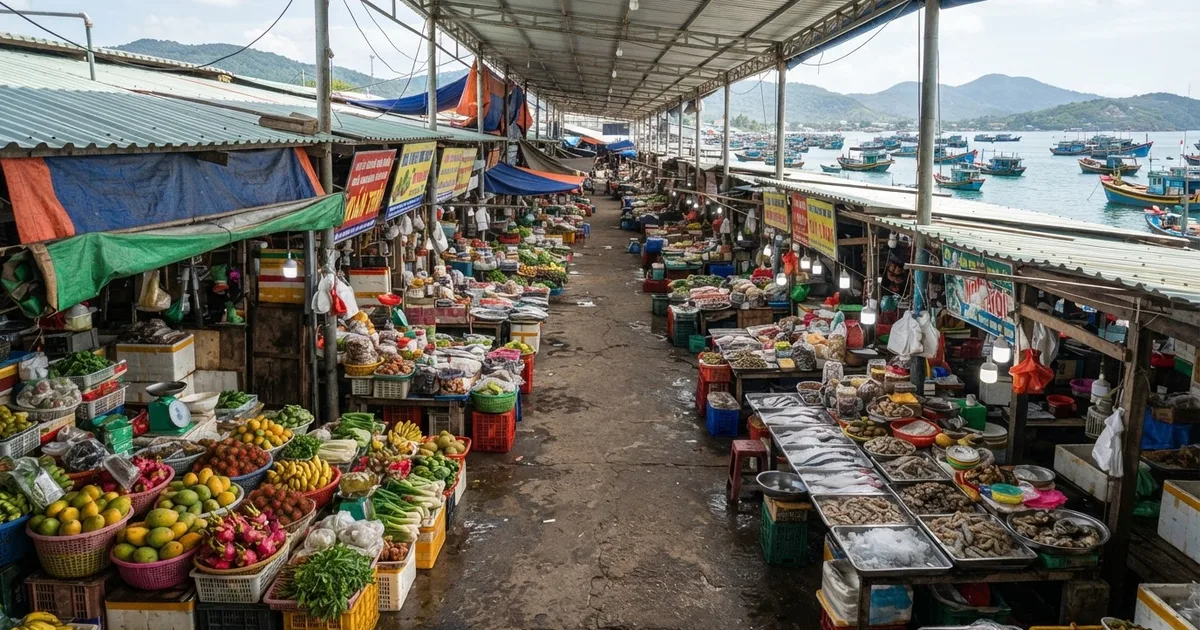
An Thoi Market is open every day from 7:00 AM to 5:30 PM and is widely regarded as the largest seafood market in southern Phu Quoc. Visit in the morning for the freshest shrimp, crab, fish, squid, snails, and oysters, with typical prices ranging from 100,000 to 1,000,000 VND per kilogram, or approximately $4 to $40 depending on the exchange rate and seafood type. It is primarily a practical local food market, not a dedicated souvenir market.
What Is An Thoi Market Like?
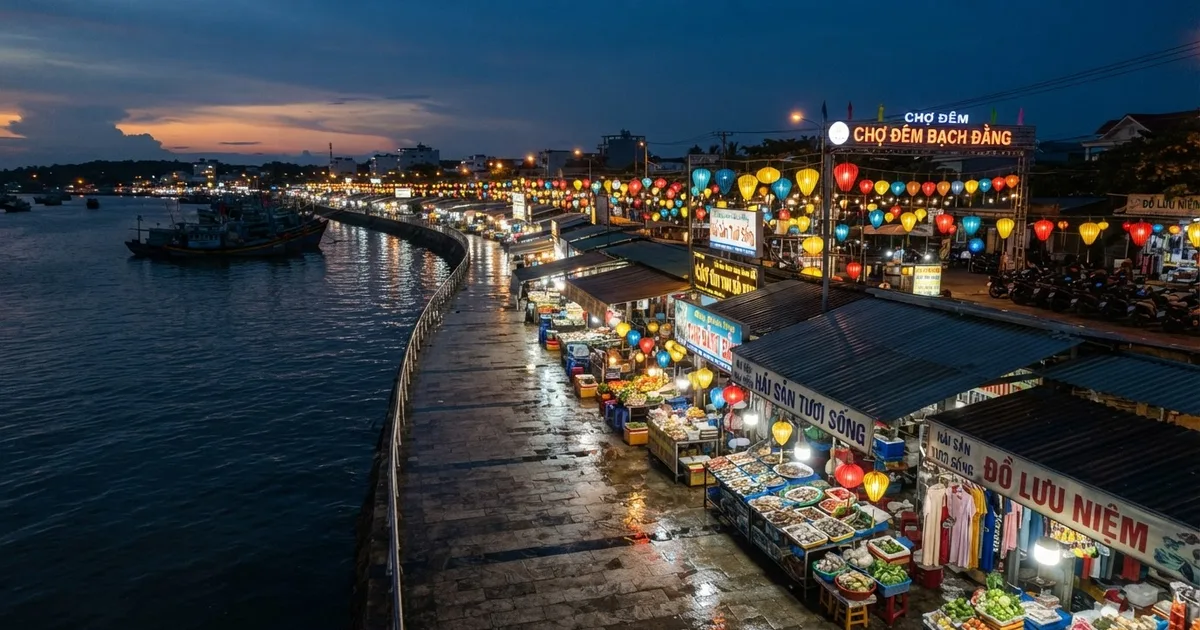
An Thoi Market is the largest local and seafood market in southern Phu Quoc. It serves residents, fishing families, food vendors, restaurants, and visitors staying around the island’s southern tip. The market is in An Thoi Archipelago, An Thoi Commune, Phu Quoc, Kien Giang, making it a convenient stop before or after exploring the nearby port area, islands, and southern beaches.
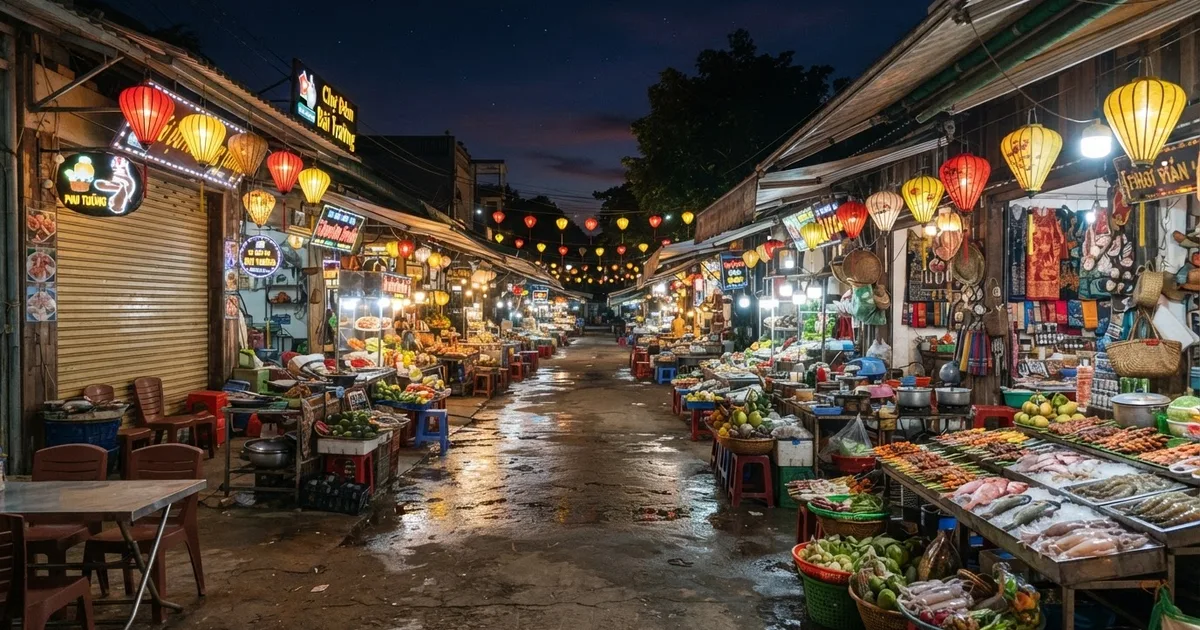
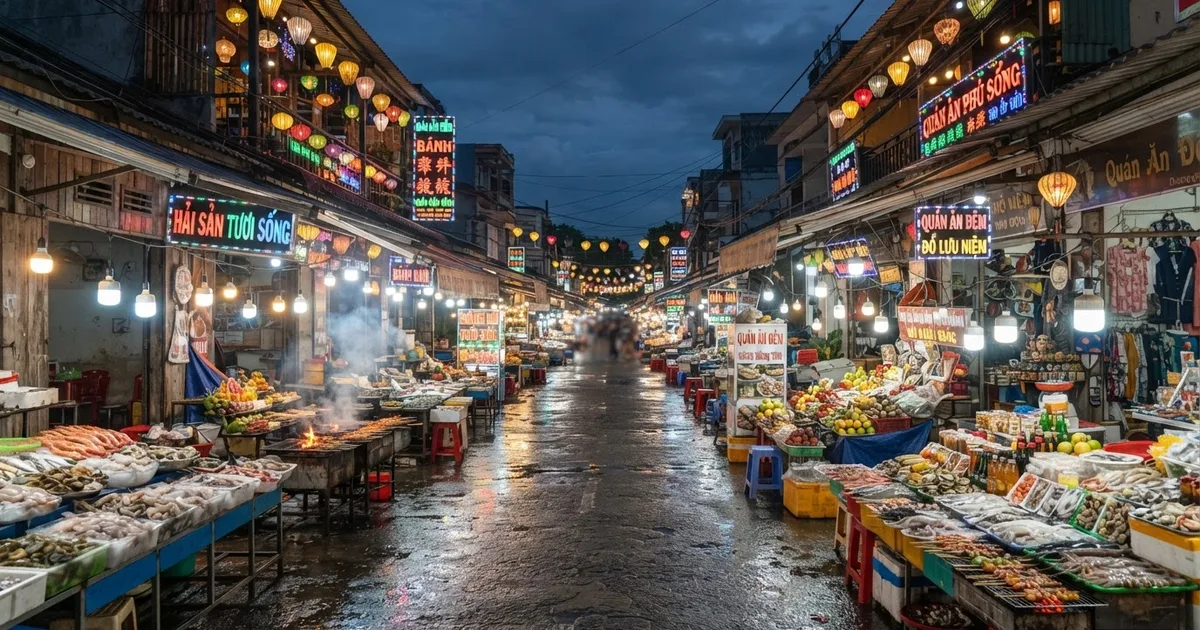
The market is practical rather than polished. Expect rows of fresh seafood, vegetables, fruit, everyday groceries, dried products, and essential household goods. Seafood is the main attraction: stalls commonly display fish, shrimp, crab, squid, shellfish, snails, and oysters. Depending on the day’s catch and the season, the selection can change noticeably.
For travelers, the most interesting part is the contrast between a working food market and the resort areas elsewhere on Phu Quoc. You can see what local shoppers buy for daily meals, compare different types of seafood, and sample traditional breakfast dishes. However, the market is a poor fit if you want an air-conditioned shopping center, a large range of branded souvenirs, or a quiet sightseeing experience. It can be wet, crowded, and strongly scented around the seafood stalls.
Opening Hours and the Best Time to Visit
An Thoi Market is open daily from 7:00 AM to 5:30 PM. Although it remains open through the afternoon, the morning is the most useful time to go. Fishing boats and suppliers bring in fresh products earlier in the day, local residents shop for meals, and breakfast stalls are more likely to be serving their traditional dishes.
| Visit time | What to expect | Best for |
|---|---|---|
| 7:00–9:00 AM | Freshest seafood, active local shopping, breakfast dishes | Seafood buyers, photographers, food travelers |
| 9:00 AM–12:00 PM | Good general selection with a slightly calmer atmosphere | Produce, dried goods, and casual browsing |
| 12:00–3:30 PM | More relaxed, but some fresh seafood may be less abundant | Visitors combining the market with other southern activities |
| 3:30–5:30 PM | Late-day shopping and remaining essentials; fewer breakfast options | Convenient short visits rather than a full market experience |
Around 7:00 to 9:00 AM, the market is generally at its most active. Arriving early also gives you more time to choose seafood before continuing to a beach, boat departure point, or another attraction. If your priority is simply buying dried seafood, pepper, fish sauce, or packaged goods, an afternoon visit can still work.
Practical tip: Bring small Vietnamese banknotes, a reusable bag, and tissues. Seafood areas may be wet, and carrying smaller notes makes simple purchases easier. If you are riding a motorbike, park without blocking entrances or delivery areas.
What Can You Buy at An Thoi Market?
Fresh seafood is the market’s main reason to visit. Common products include shrimp, crab, fish, squid, snails, oysters, and other shellfish. You may also find fresh fish and squid alongside prepared or dried products, allowing you to shop for either a same-day meal or a food gift to take home.
| Product category | Examples | Useful buying note |
|---|---|---|
| Fresh seafood | Shrimp, crab, fish, squid, snails, oysters | Selection and price depend on the day’s catch and size. |
| Dried seafood | Dried squid, dried shrimp, dried fish | Easier to transport than fresh products; ask for sealed packaging. |
| Local ingredients | Phu Quoc pepper, fish sauce, vegetables | Good choices for cooking or small food gifts. |
| Produce | Seasonal local fruits and vegetables | Availability changes with season and supply. |
| Everyday goods | Essential groceries and household items | Useful for longer stays in the south of the island. |
| Nearby shopping | Pearl jewelry | Compare quality and seller information before buying. |
Dried seafood is one of the most practical purchases for visitors. Dried squid, dried shrimp, and dried fish are recognized local specialties and are less difficult to carry than fresh seafood. Local pepper and fish sauce are also popular choices. Check the packaging carefully if you are taking food on a flight, and remember that airline and destination-country rules may restrict seafood or liquid products.
Seasonal fruit and vegetables make the market useful beyond seafood. The exact selection changes throughout the year, so do not expect one fixed list of fruits. Pearl jewelry can be found near An Thoi Market, but the market itself is better understood as a place for seafood and local food rather than as a specialist jewelry or souvenir center.
Seafood Prices: How Much Should You Budget?
Typical seafood prices at An Thoi Market are reported at approximately 100,000–1,000,000 VND per kilogram. That broad range is about $4–$40 per kilogram using a rough exchange rate of 25,000 VND to $1; the actual dollar amount changes with exchange rates. The price depends on the species, freshness, size, season, supply, and whether you are buying a premium product such as large crab or selected shellfish.
| Budget level | Approximate VND price | Approximate USD equivalent | What affects the price |
|---|---|---|---|
| Lower end | 100,000 VND/kg | About $4/kg | Smaller, common, or more plentiful products |
| Middle range | 300,000–600,000 VND/kg | About $12–$24/kg | Product type, size, season, and daily supply |
| Upper end | 1,000,000 VND/kg | About $40/kg | Larger, premium, or less plentiful seafood |
These are guide prices, not a fixed market tariff. Confirm the price before the seafood is weighed, and check whether the quoted amount is for one kilogram or for the entire item. It is also sensible to ask whether cleaning, cutting, cooking, packaging, or delivery is included. For a simple purchase, point to the seafood you want, confirm the total cost, and use a calculator if there is any uncertainty.
Visitors who are not confident choosing seafood may prefer dried products, fruit, or packaged fish sauce. An independent local restaurant may also be a better option than buying live or fresh seafood if you have no kitchen, no cooler, and no way to cook it soon. The market is a poor fit for travelers expecting restaurant-style service or a guaranteed menu price; it is a working market where availability and rates change.
What to Eat: Breakfast at the Market
An Thoi Market is known for traditional breakfast dishes, making an early visit worthwhile even if you are not shopping for seafood. Common options include Bun Quay, Bun Ca, and Banh Canh Cha Ca. These are local-style noodle dishes associated with fish, seafood, or fish cake, although the exact preparation depends on the stall.
Bun Quay is a particularly recognizable Phu Quoc dish. It is commonly prepared with noodles and a seafood-based mixture, with the name referring to the practice of stirring or mixing ingredients. Bun Ca is a fish noodle dish, while Banh Canh Cha Ca is a thicker noodle soup served with fish cake. Ask the vendor what is available that morning and whether a dish contains seafood if you have allergies.
Breakfast stalls are most relevant early in the day, so do not plan on finding the full selection at 4:00 PM. A market breakfast is best for travelers who want a local food experience and are comfortable with simple seating and a busy environment. It is less suitable for anyone needing a formal meal, extensive dietary substitutions, or a guaranteed English-language menu.
Simple breakfast plan
- Arrive between 7:00 and 9:00 AM.
- Look for a busy stall with local customers.
- Ask which of Bun Quay, Bun Ca, or Banh Canh Cha Ca is available.
- Confirm ingredients if you have seafood or other food allergies.
- Carry small notes and keep belongings close in crowded areas.
How to Shop Responsibly and Avoid Common Problems
Shopping at a seafood market is straightforward when you slow down and confirm each step. First, choose the product and ask the price per kilogram. Next, watch the weighing process and confirm the total. Finally, check how the seafood will be packed. This is especially important if you plan to travel by motorbike or take the food back to accommodation.
Do not buy more fresh seafood than you can safely store and cook. Without ice or refrigeration, seafood should not remain in the heat for a long period. Dried seafood is a better choice for a full-day itinerary, while fresh products make sense only when you can take them directly to a kitchen or restaurant that accepts outside ingredients.
Wear footwear that can tolerate water and avoid placing phones, cameras, or wallets on wet counters. Keep a small bag separate for food and protect clothing from seafood water. Ask before taking close-up photographs of vendors or customers. Bargaining may be possible in some situations, but a respectful question about the price is more appropriate than treating every small purchase as a negotiation.
For pearl jewelry or packaged products sold near the market, compare several sellers and request information about the item before paying. An Thoi Market is a poor fit for travelers who want a one-stop, fully standardized shopping experience. It suits visitors who value local food, fresh products, and a glimpse of daily commerce more than convenience or luxury presentation.
How to Include An Thoi Market in a Southern Phu Quoc Day
The market works well as an early stop because it opens at 7:00 AM and is most active in the morning. You can have breakfast, browse fresh produce and seafood, buy dried products, and then continue with other plans in southern Phu Quoc. Leaving the market before midday is useful if you are carrying food or want to avoid the strongest heat.
Visitors departing for a boat trip from the An Thoi area may use the market as a practical breakfast or supply stop, but they should allow extra time for traffic, parking, and finding the correct departure point. Do not assume that a market visit and a boat departure are at the same location. Confirm the pier, meeting time, and transport arrangements separately.
A motorbike can make it easier to combine the market with several southern attractions, but only carry fresh seafood if it is properly packed and your route is short. A taxi or local driver is more convenient for visitors buying several bags, traveling with children, or avoiding wet food on a scooter. If you are staying elsewhere on Phu Quoc, ask your accommodation or local rental provider about the best current route and parking conditions.
Good fit
Food travelers, early risers, visitors seeking fresh or dried seafood, and anyone interested in everyday local shopping.
Poor fit
Travelers looking for a quiet attraction, air-conditioned shopping, a large souvenir selection, or a predictable restaurant menu.
Practical Visitor Checklist
A little preparation makes the visit easier, particularly if this is your first wet market in Phu Quoc. The most important decisions are when to go and what you intend to buy. A short breakfast visit requires very little planning, while buying fresh seafood requires transport, storage, and cooking arrangements.
- Visit between 7:00 and 10:00 AM for the strongest combination of freshness and activity.
- Bring small notes, a reusable bag, tissues, and hand sanitizer.
- Wear secure shoes that can handle wet floors.
- Confirm seafood prices per kilogram before weighing.
- Ask for sealed packaging for dried seafood, fish sauce, or other food gifts.
- Buy fresh seafood only if you can keep it cool and use it soon.
- Ask permission before photographing people or individual stalls.
- Keep valuables secure in busy areas and do not leave belongings on a scooter.
- Allow extra time if the market visit is followed by a boat trip or timed activity.
The simplest plan is to arrive early, eat breakfast, walk through the seafood and produce areas, and choose one or two practical products such as dried squid, local pepper, or fish sauce. This gives you a genuine market experience without turning the visit into a difficult food-transport problem.
Frequently Asked Questions
What time does An Thoi Market open?
An Thoi Market opens at 7:00 AM every day and closes at 5:30 PM. Morning is the best period for the freshest seafood, the widest activity, and traditional breakfast dishes such as Bun Quay, Bun Ca, and Banh Canh Cha Ca.
Where is An Thoi Market located?
An Thoi Market is in An Thoi Archipelago, An Thoi Commune, Phu Quoc, Kien Giang. It is in the south of Phu Quoc and is commonly included in itineraries covering the An Thoi area, southern beaches, and boat-trip departure points.
How much does seafood cost at An Thoi Market?
Typical seafood prices range from about 100,000 to 1,000,000 VND per kilogram, approximately $4 to $40 using a rough rate of 25,000 VND per dollar. The final price depends on the species, size, freshness, season, and supply on the day you visit.
What seafood can I buy at An Thoi Market?
Common products include fresh shrimp, crab, fish, squid, snails, oysters, and other shellfish. The market also sells dried squid, dried shrimp, dried fish, fresh produce, vegetables, seasonal fruit, and essential groceries. Availability changes according to the daily catch and season.
Is An Thoi Market good for souvenirs?
An Thoi Market is better for local food than for general souvenirs. Good purchases include dried seafood, local pepper, and fish sauce. Pearl jewelry can be found near the market, but compare sellers and product information carefully if you are considering a valuable purchase.
Can I eat breakfast at An Thoi Market?
Yes. The market is known for traditional breakfast dishes including Bun Quay, Bun Ca, and Banh Canh Cha Ca. Go in the morning, ideally between 7:00 and 9:00 AM, when breakfast stalls are most active. Ask about ingredients if you have seafood allergies or dietary restrictions.
Should I visit An Thoi Market in the afternoon?
You can visit until 5:30 PM, especially for dried seafood, vegetables, fruit, fish sauce, and essential goods. However, morning is better for fresh seafood and breakfast. By afternoon, some fresh products may be less abundant and the market atmosphere is generally quieter.
Is An Thoi Market suitable for buying fresh seafood to take away?
It can be, but only if you have a short journey, suitable packing, and access to ice or refrigeration. Fresh seafood should not sit in the tropical heat for a long time. For a full-day sightseeing plan, dried squid, dried shrimp, dried fish, pepper, or fish sauce are easier purchases.
Need help planning your An Thoi Market visit, arranging transport, or combining it with a southern Phu Quoc itinerary? Contact Sabrina Rental for practical local advice and help with your island plans.
Contact Sabrina Rental